
Last updated October 16, 2026
Free on-site gate assessment - hinges, posts, and your LiftMaster or Nice gate operator checked before anything is quoted
The assessment is free and the quote is the invoice.
Get your free estimateGate Repair Warning Signs: A San Diego Homeowner’s Reference Guide
Most gate failures in San Diego don’t happen suddenly. They build over months, sending signals that get misread as quirks or minor annoyances. A hesitation here, a click there, a gate that sits a half-inch lower than it did last spring. This guide covers the specific warning signs, what they actually mean in mechanical terms, how urgent each one is, and how to describe what you’re seeing so a gate repair company can give you a real phone estimate instead of a vague “we’ll have to see it.”
Styles & brands we work with
- Wrought iron
- Wood & steel frame
- Farm & ranch
- Sliding driveway gates
- LiftMaster operators
Quick Answer
The most common gate repair warning signs in San Diego are a gate that hesitates before moving, grinding or clicking sounds during operation, a gate that reverses mid-cycle, visible rust at hinge points, and a gate that only responds to some remotes. Each points to a different component: hesitation usually means drivetrain strain, grinding means worn rollers or gears, reversing means a sensor fault, and rust at hinges signals structural end-of-life. Catching these early typically means a $180 to $650 repair instead of a $900 to $1,400 motor-and-post replacement.
Table of Contents
- Sound-Based Diagnostics: What Your Gate Is Telling You
- Visual Checks: Rust, Gaps, and What They Actually Mean
- Behavior-Based Flags: Reversing, Partial Opening, Remote Failures
- Urgency Tiers: What Can Wait, What Can’t, and What’s a Same-Day Safety Issue
- How to Document Symptoms for an Accurate Phone Estimate
- What San Diego’s Climate Does to Gates
- Common Mistakes to Avoid
- When to Call a Professional
- Frequently Asked Questions
- The Bottom Line
Sound-Based Diagnostics: What Your Gate Is Telling You
A gate in good working order makes a consistent, low hum during operation. When that hum changes, the sound is pointing at a specific component. Here’s how to read the four most common noises we hear on service calls throughout San Diego, from Rancho Bernardo to Chula Vista.
Grinding or scraping. This almost always means metal-on-metal contact where there shouldn’t be any. On a sliding gate, the most common culprit is worn track rollers or a track that has shifted out of alignment, causing the gate to drag. On a swing gate, grinding typically points to hinge pins that have lost lubrication and are now scraping against the hinge barrel, or to a bent gate frame that’s rubbing against the post. Left alone, grinding wear accelerates: a gate dragging across its track for three months can chew through rollers and warp the track itself, doubling the repair bill.
Clicking. A rapid clicking sound from the operator, the motor box that drives the gate, usually means the starter capacitor is failing or the limit switch is chattering. The limit switch tells the motor where to stop; when it starts to fail, it can cycle rapidly as it hunts for position. Clicking on a Gate operator like a DoorKing or Viking unit is often the first sign of a failing control board or a weak battery in the backup system. A single click followed by no movement means the motor is receiving power but can’t turn over, often due to a seized gearbox or a jammed drive chain.
Humming without movement. When the motor hums but the gate doesn’t move, the motor is energized and trying to work but something mechanical is preventing it. This could be a snapped drive chain, a stripped gear inside the operator, or a seized bearing in an idler pulley. Do not hold the open button and force it. Humming without movement means the motor is drawing current against a locked load, which overheats windings and turns a mechanical repair into a motor replacement.
Intermittent beeping. Many modern operators, including units from Ghost Controls and Elite, use beeping as a diagnostic alert. A single beep when you press the remote often means the battery in the remote is low. Continuous beeping during operation can signal an obstruction in the safety sensor path or a misaligned photo eye. If the beep happens only when the gate starts moving and then stops after a few seconds, check the sensor alignment first. It’s the cheapest fix on this list and the one most commonly resolved with a quick adjustment.
In our experience, San Diego homeowners wait longer on grinding sounds than any other noise. A gate that grinds is still working, so the brain says “deal with it later.” But grinding is the sound of the repair bill growing. Every cycle that grinds is wearing down a part that was originally designed to be replaced at a specific interval.
Visual Checks: Rust, Gaps, and What They Actually Mean
You don’t need a multimeter to spot most gate problems before they become failures. A slow walk around the gate once a season catches most of what eventually strands people.
The hinge gap test. Stand at the hinge side of a swing gate and look at the gap between the gate frame and the post. A healthy hinge shows a gap that’s even from top to bottom, typically between a quarter-inch and half-inch. When the gap narrows at the top, the hinge itself has worn and the gate is sagging. A gate that sags more than three-quarters of an inch at the latch end is already loading the operator incorrectly. The motor has to push against the extra friction of the misaligned hinges, and the hinges themselves are grinding their pins into ovals.
Rust patterns. Surface rust on a powder-coated gate is cosmetic and can be spot-sanded and touched up. But rust that forms in a line along a weld seam, or rust that flakes in sheets, is structural. At the coast in San Diego, salt air accelerates this dramatically. The neighborhoods within three miles of the ocean, like Point Loma, Ocean Beach, and La Jolla, see hinge and weld rust at roughly twice the rate of inland areas like Santee or Poway. If the rust is on a moving part, a hinge pin, a roller, a spring, it’s already working its way through the material.
Track and roller condition. On a sliding gate, look at the track where the rollers sit. A polished, shiny track means the rollers are turning freely. A track with flat spots, notches, or visible grooves means the rollers have stopped rolling and are now sliding. Once rollers stop rolling, they develop flat spots of their own, and the gate starts to bounce or chatter as it moves. A roller with a visible flat spot is done. Replacing rollers before the track gets damaged is typically a $150 to $350 job in San Diego, depending on the gate’s weight and how many rollers it uses.
Post lean. A gate post that has started to lean, even slightly, is a structural problem, not an aesthetic one. The post carries the entire weight of the gate and the force of the operator. When a post leans, the gate’s center of gravity shifts, and every cycle puts more stress on the hinges, the latch, and the motor. In San Diego’s clay-heavy soils, winter rains can cause post footings to shift. If you notice the gate starting to stick at the latch, or the post base showing a crack in the concrete footing, that’s a post issue, not a latch issue.
Behavior-Based Flags: Reversing, Partial Opening, Remote Failures
Sometimes the gate doesn’t make a sound at all. It just behaves wrong. These behavioral flags are often the hardest to diagnose because they’re intermittent, but they’re also the ones most likely to point at a genuine safety issue.
Reversing unexpectedly. A gate that starts to close and then reverses for no apparent reason is responding to a signal it thinks means “obstruction.” There are two common sources. The first is the safety edge or photo eye, a sensor that detects anything in the gate’s path. A dirty lens, a misaligned receiver, or a failing sensor can trigger a false obstruction reading. The second is the loop detector, the copper wire loop buried in the driveway that tells the gate when a car is present. A failing loop detector can send ghost signals that make the gate think a car has pulled up, which triggers a reverse. False reversals are a safety system doing exactly what it was designed to do, but the system needs calibration.
Opening partially or stopping mid-cycle. A gate that only opens halfway, or stops partway through the close, is usually a limit switch problem. The limit switch tells the motor where the open and closed positions are. When it drifts, the gate’s “closed” position moves. Some days the gate closes fully; some days it stops three inches short. The fix is a limit switch recalibration, which in most cases takes a technician about 30 minutes. Waiting on this one turns a simple recalibration into a motor replacement when the gate repeatedly drives itself into the physical stop and burns out the gearbox.
Only one remote works. A gate that works from the keypad and the wall button but not from a particular remote is usually a remote issue, not a receiver issue. Start with the battery. If a fresh battery doesn’t fix it, the remote may have lost its programming. If no remotes work but the wall button does, the receiver in the operator has likely failed or lost its programming. For most operators, including Viking and Ghost Controls units, a receiver replacement is a straightforward component swap.
The two-second hesitation. A gate that hesitates for one to two seconds before moving after you press the button is not a “slow” gate. The operator is pulling current against a load it wasn’t designed for. That pause is the motor fighting mechanical resistance, usually from a hinge that’s binding, a roller that’s not rolling, or a gearbox low on oil. Every hesitant start sends a surge through the windings and strains the capacitors. It’s the single most common pre-failure signal we see, and it’s also the one homeowners most often describe as “it’s always done that.”
Urgency Tiers: What Can Wait, What Can’t, and What’s a Same-Day Safety Issue
Not every warning sign is an emergency. Here’s how to triage what you’re seeing.
Tier 1: Same-day safety issue. These are the calls we treat as urgent in San Diego:
- A gate that reverses onto a person, a pet, or a car with no obstruction present. This means the safety sensors are malfunctioning in a dangerous direction.
- A gate that will not stay closed. For homes with pools, a gate that won’t close is a code compliance issue under California’s pool barrier regulations, which require self-closing, self-latching gates. This is a child-safety matter, not a convenience issue.
- A gate that drops or sags suddenly when opening or closing. A hinge failure on a heavy gate can send a 400-pound gate swinging free.
- Smoke, burning smell, or a visibly melted electrical connection at the operator.
Tier 2: Attention this week. These issues don’t require a middle-of-the-night call, but ignoring them for a month will usually escalate the repair cost significantly:
- Grinding or scraping during operation. The grinding part is wearing out, and it’s taking its mating surfaces with it.
- Humming without movement. The motor is drawing locked-rotor current and will overheat.
- The two-second hesitation. This is the drivetrain crying for help.
- A gate that opens partially and stops. The limit switch is drifting and every full cycle is hammering the physical end stop.
Tier 3: Can wait up to 30 days. These are real issues but not urgent:
- One remote that doesn’t work. You still have other ways to operate the gate.
- A single beep from the remote. It’s a low battery, not a system failure.
- Surface rust on non-moving parts. Touch it up with rust-inhibiting paint and keep an eye on it.
- A gate that’s slightly slow to close but still fully seals. Lubrication and adjustment will bring it back.
How to Document Symptoms for an Accurate Phone Estimate
When you call a gate repair company, the quality of your description determines the quality of the estimate you get on the phone; see How to Hire a Gate Repair Contractor in San Diego: A Step-by-Step Guide for what to ask before you book. Here’s how to do it:
- Note the exact symptom. Not “the gate is acting up,” but “the gate grinds for about three seconds when it starts to open, then the grinding stops and it moves normally.”
- Time the hesitation. If the gate hesitates before moving, count it. “Two seconds” tells us something different than “five seconds.”
- Identify when it happens. Does the grinding happen in the morning but not the afternoon? In San Diego’s coastal areas, morning condensation on the gate hardware can cause temporary noise that goes away as things dry out, which changes the diagnosis.
- Check which remotes work and which don’t. A specific remote failure versus a total remote failure points at different components.
- Take a video. A 15-second phone video of the gate making the noise is more useful than three paragraphs of description. Most repair companies can diagnose from a good video before they ever dispatch a truck.
- Note the gate’s age. A gate installed in 2015 that has never had hinge service is a very different thing than a gate installed in 2022 with the same symptom. Age tells us what’s likely worn versus what’s likely failed.
- Describe any recent changes. Did you have landscaping done near the gate? A new sprinkler line can shift the soil and throw the post alignment off. Did the gate get hit by a delivery truck? Even a low-speed bump can bend a hinge pin or knock a track out of alignment.
The goal is to give the company enough information to arrive with the likely parts on the truck. That’s the difference between a one-visit repair and a two-visit repair, and it’s the difference between a firm quote and a vague range. At Gate Repair in San Diego, we can quote most common repairs over the phone with a 10-minute symptom walkthrough.
What San Diego’s Climate Does to Gates
San Diego is not one climate. It’s three, and they each affect gates differently.
The coastal zone. Neighborhoods within three miles of the water, roughly from Imperial Beach up through La Jolla, deal with salt-laden marine air. Salt air accelerates rust on any unprotected metal. Hinges that would last 15 years in El Cajon might last 8 in Point Loma. Powder-coated gates hold up reasonably well, but the hardware, hinges, springs, rollers, and brackets, is usually the failure point. Coastal homeowners should inspect gate hardware twice a year and expect hinge and roller replacement on a shorter cycle.
The inland valleys. East of the 15, areas like Santee, El Cajon, and Lakeside, see wider daily temperature swings and more dust. Fine dust settles into track grooves and hinge barrels, mixing with lubricant to form an abrasive paste. That paste accelerates wear on moving parts. In these areas, regular cleaning and re-lubrication of the track and hinges extends the life of the hardware considerably.
Clay soil zones. Much of San Diego sits on expansive clay soil that swells when wet and shrinks when dry. Post footings and gate tracks sit in or on this soil. After winters with decent rain, clay-rich areas like Mira Mesa, Scripps Ranch, and parts of North County see post shifting and track settling. A gate that worked fine in October and starts sticking in February is often dealing with soil movement, not a mechanical failure.
We’ve been working on gates in San Diego since 2008, and the same theme shows up across every neighborhood: the homeowners who inspect seasonally spend less than the homeowners who wait for the gate to stop working. For more guides & resources on keeping your gate running, visit our blog. A seasonal inspection catches a hinge at 80% worn before it becomes a snapped pin and a bent post.
One more San Diego-specific note: pool gates. If your gate encloses a pool, California law requires it to be self-closing and self-latching. A gate that no longer closes fully, or a latch that doesn’t catch, puts you out of compliance and creates a genuine safety hazard. The state takes this seriously, and so should you. If the gate around your pool isn’t closing on its own, treat it as Tier 1 and get it addressed same-day.
For new installations or full replacements, our Gate Installation in San Diego guide covers what to expect from the process, from post setting through operator programming.
Common Mistakes to Avoid
- Lubricating a grinding gate and calling it fixed. Grease quiets a grinding hinge for a few weeks, but it doesn’t replace the worn metal. The hinge is still ovaled out; you’ve just made it quieter while it continues to wear. The grinding will come back, and the repair will cost more when it does.
- Replacing the remote before checking the battery. A $3 battery fixes most remote problems. A new remote that won’t program to the receiver is a $150 expense that didn’t solve the actual problem.
- Ignoring the two-second hesitation. That pause is the motor straining. Every strained start shortens the motor’s life and increases the strain on the capacitor and gearbox. It’s the cheapest pre-failure signal to address, and the one most often ignored.
- Painting over spreading rust. Paint seals in rust. If the rust is structural, meaning the metal is flaking or you can push a screwdriver through it, paint buys you a few months of appearance and hides the problem until the hinge or post fails.
- Adjusting the limit switch yourself to fix a sagging gate. A gate that needs the limit switch adjusted to close fully is usually a gate that has sagged at the hinges. Adjusting the switch compensates for the sag without fixing the cause, which means the motor is still pushing a misaligned load.
- Waiting on a post lean. A leaning post gets worse slowly, then catastrophically. The moment the post shifts enough for the gate to stick, the footing is compromised, and the longer it leans, the more expensive the reset.
When to Call a Professional
Call a gate professional when the symptom involves a motor, a sensor, a post, or any component that carries the gate’s weight. These are not DIY-friendly repairs. A gate motor draws significant current, a misaligned safety sensor is a safety liability, and a gate post under tension can fail suddenly. Specifically, call when you hear grinding that doesn’t go away after cleaning and lubricating, when the gate reverses without obstruction, when the hesitation before movement is more than a second, or when you see structural rust on hinges, rollers, or brackets. Portcullis Gate Repair San Diego offers free estimates throughout the San Diego area. Call (619) 793-3558 and describe what you’re seeing; we’ll give you a written price before any work begins.
For electric gate issues specifically, our Electric Gate Repair in San Diego page covers operator diagnostics, sensor alignment, and control board replacement in detail.
Frequently Asked Questions
Most San Diego gate repairs run between $180 and $850. Hinge replacement typically runs $180 to $450 per hinge depending on the gate’s weight and material. Roller replacement on a sliding gate runs $150 to $350. A limit switch recalibration runs $120 to $250. A full operator replacement, including a new motor and control board, typically runs $850 to $1,600 depending on the operator brand and gate weight. These are the ranges we quote on most residential jobs in San Diego; your specific price depends on the equipment and the extent of the damage. Call (619) 793-3558 for an exact quote after a 10-minute symptom walkthrough. Estimates are free.
A gate that hesitates for a second or two before moving is showing mechanical resistance somewhere in the drivetrain. The motor is pulling current against a binding hinge, a stuck roller, or a low gearbox oil level. The pause you’re seeing is the motor’s torque curve flattening out as it overcomes that resistance. It’s not normal, and it won’t fix itself. The longer it goes on, the more strain you’re putting on the motor windings and the starter capacitor.
For Tier 1 safety issues, we prioritize same-day response in San Diego. A gate that won’t close around a pool, a gate reversing onto people, or a gate that has lost structural integrity gets dispatched immediately. For Tier 2 and Tier 3 issues, we schedule within the week and give you a real arrival window when you book. A live person answers the phone 24 hours a day, so you’ll never leave a message and wonder if anyone got it.
Every repair we make at Portcullis Gate Repair San Diego comes with a written guarantee on the invoice. If the repair fails within 365 days of the service date, we come back and fix it at no charge. No pro-rated parts, no “the warranty only covers the part, not the labor” fine print. The guarantee is written on the invoice, stamped, and dated. If it’s not done right, we make it right.
Yes. Our technicians are trained on nine major gate-operator brands, including Viking, Ghost Controls, DoorKing, and Elite, plus LiftMaster, FAAC, BFT, Linear, and Mighty Mule. That means the technician who shows up already knows the specific system on your property, including its control board layout, sensor protocol, and common failure points. No reading the manual in your driveway.
A well-installed steel or aluminum gate in San Diego typically lasts 15 to 25 years, with hardware replacements along the way. Hinges last 8 to 15 years depending on the gate’s weight and proximity to salt air. Rollers on a sliding gate last 7 to 12 years. Operators last 10 to 15 years with regular maintenance. Coastal gates trend toward the shorter end of every range. The single biggest factor in gate longevity is whether the hardware gets replaced when it’s worn rather than when it’s failed.
The Bottom Line
Gate failure in San Diego rarely comes without warning. The two-second hesitation, the grinding sound, the gate that reverses on its own, the rust line on the hinge pin: each one is a specific diagnostic signal pointing at a specific component. Read them early and you’re looking at a hinge or roller replacement. Ignore them and you’re looking at a motor, a post, or a full gate rebuild. Walk the gate once a season. Listen to it. When something changes, call a professional who will give you a written price before touching a single bolt. The alternative is the repair you didn’t schedule, at the price you didn’t expect, on the day you didn’t choose.
For more on how we approach gate service in San Diego, visit our Portcullis Gate Repair San Diego home page.
Written by Dean Prescott, Owner at Portcullis Gate Repair San Diego, serving San Diego since 2008.
See the difference
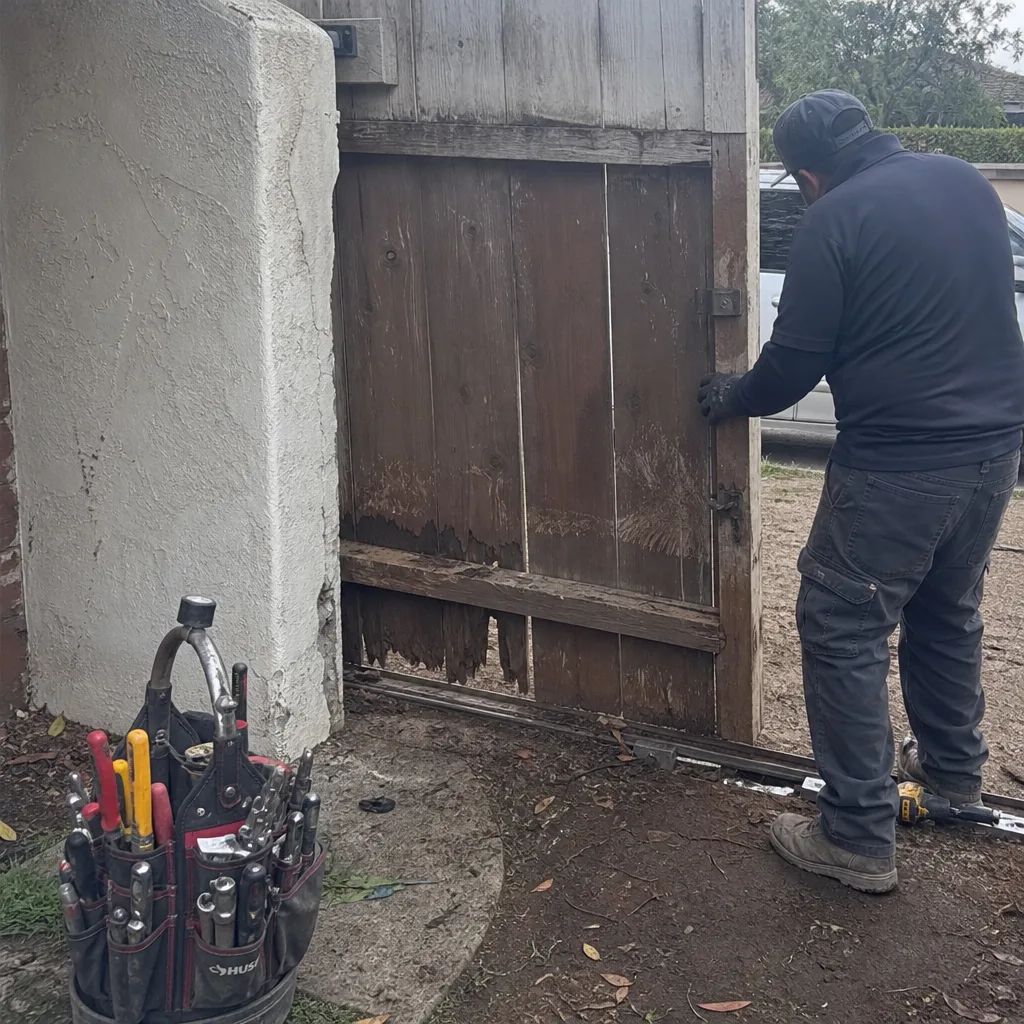 Before
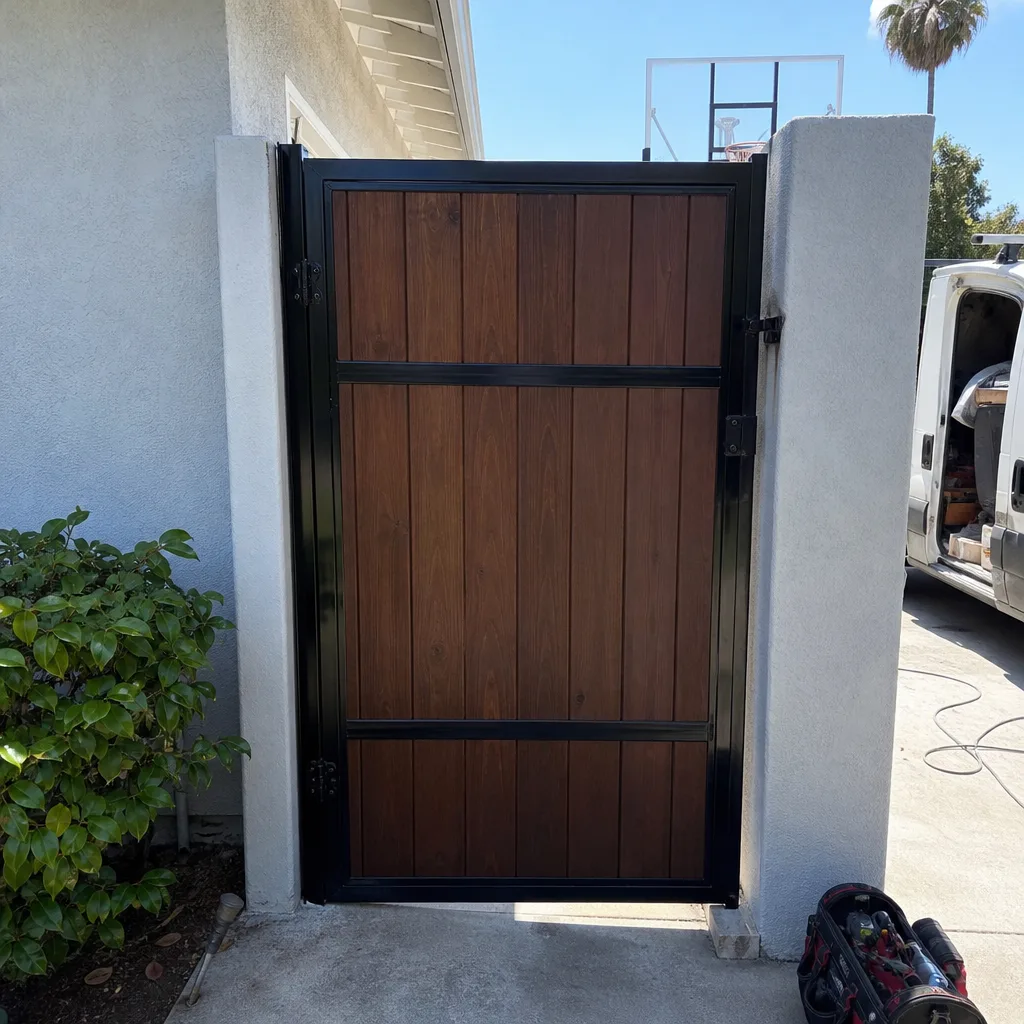 After
After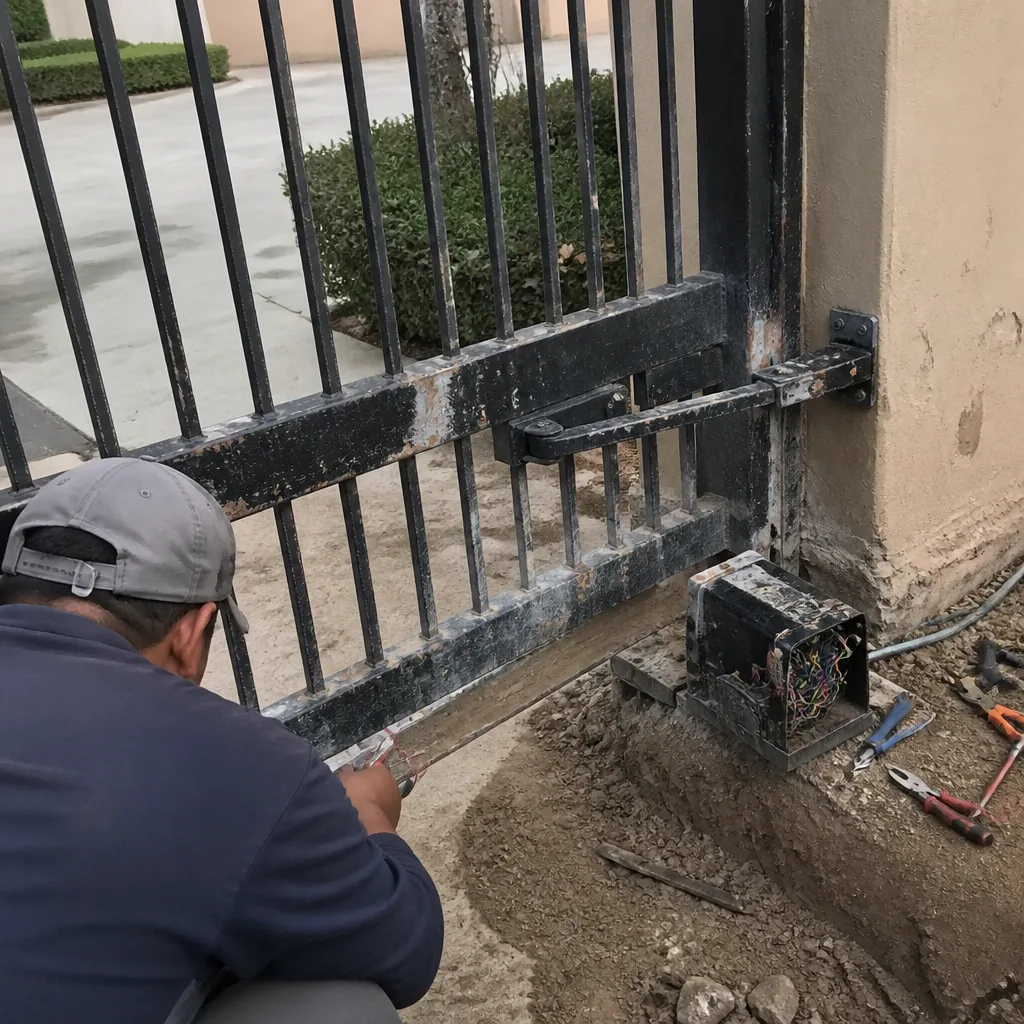 Before
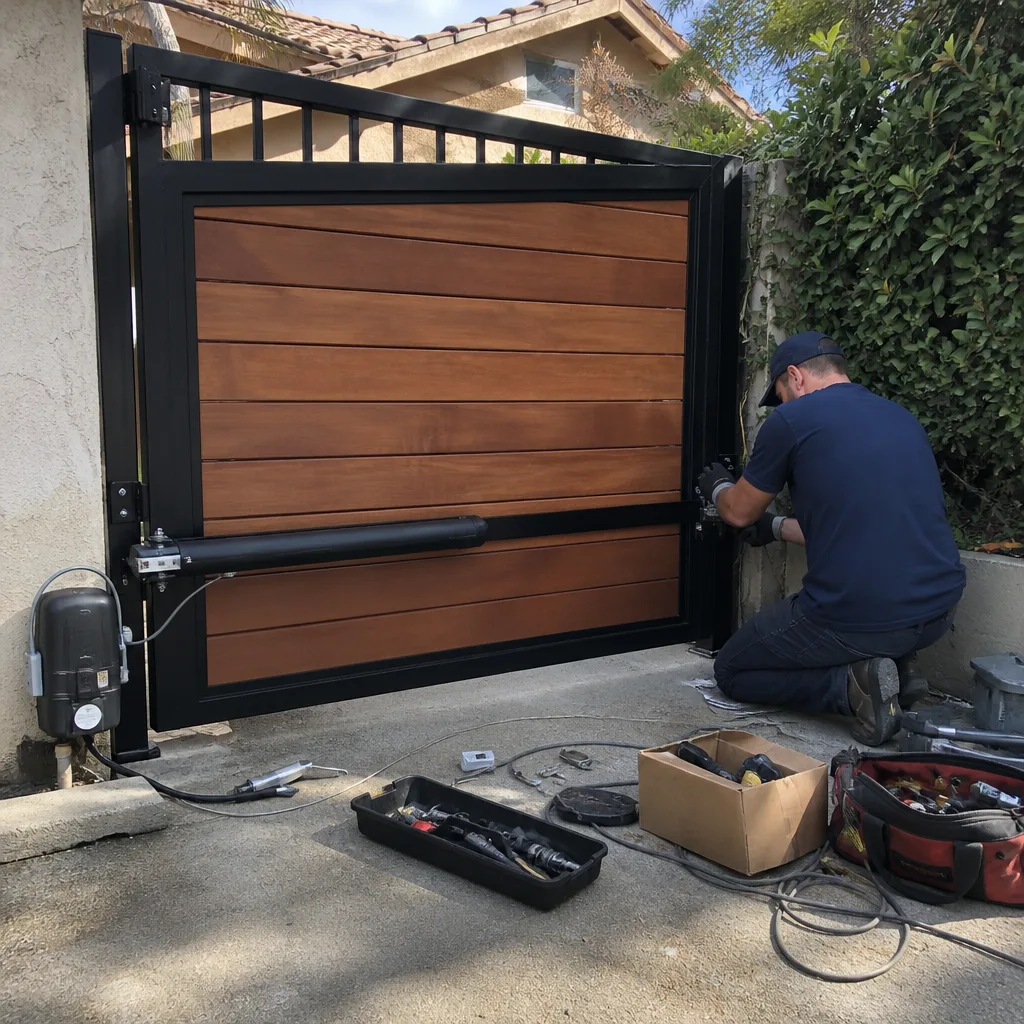 After
After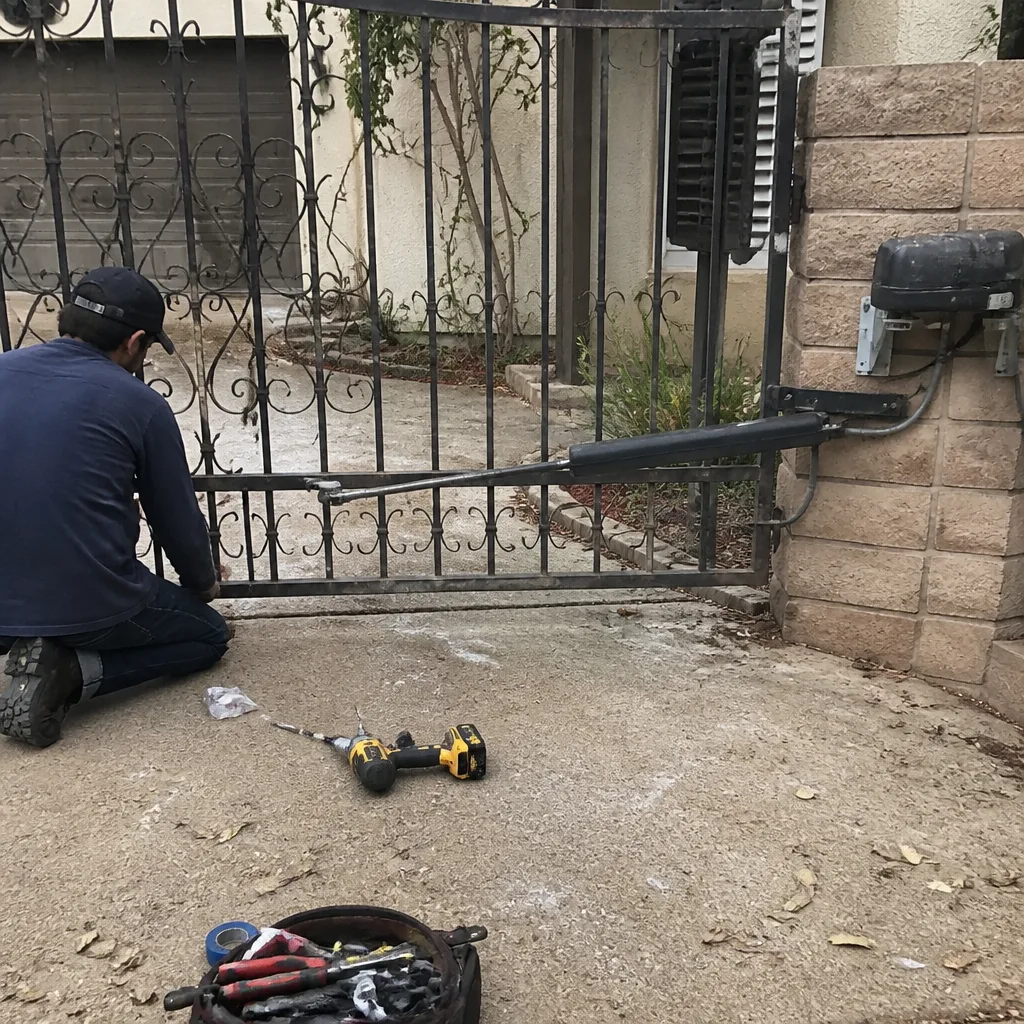 Before
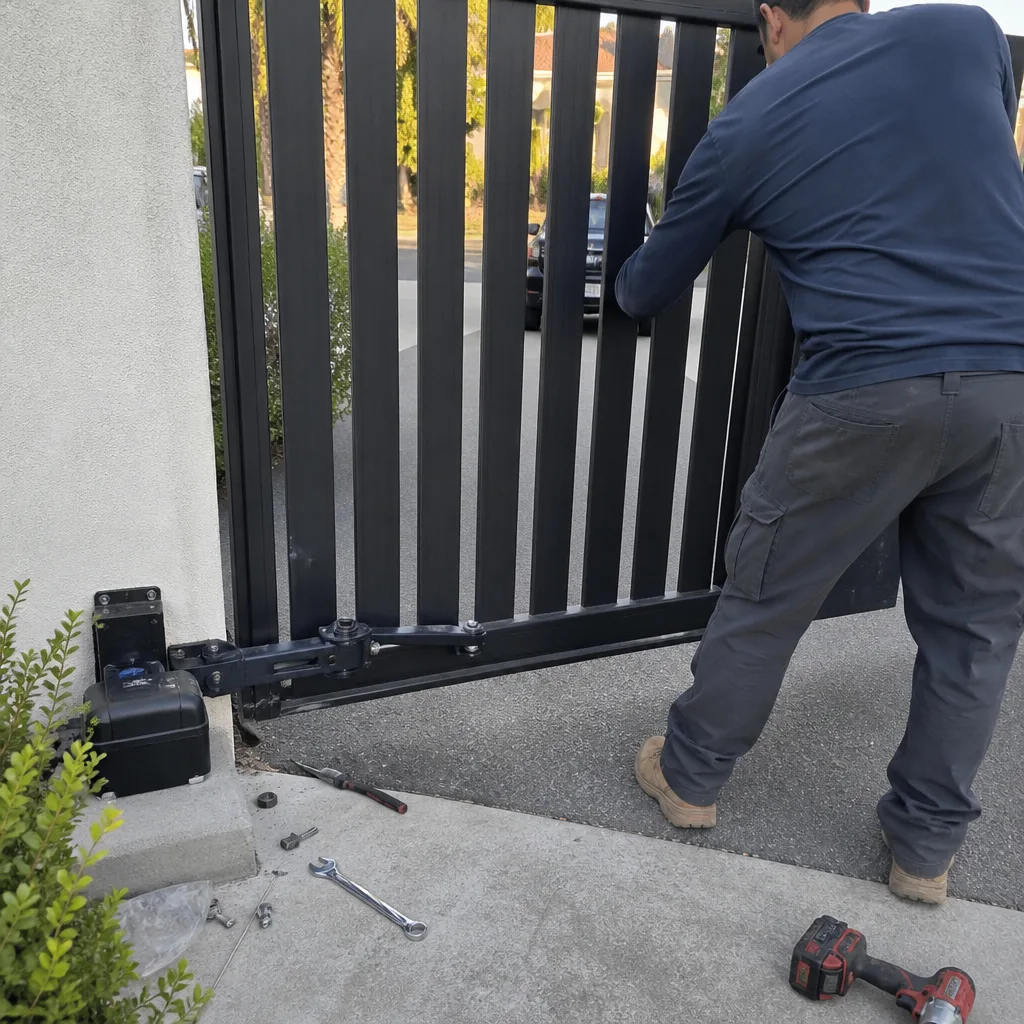 After
After