
Last updated October 16, 2026
Free on-site gate assessment - hinges, posts, and your LiftMaster or Nice gate operator checked before anything is quoted
The assessment is free and the quote is the invoice.
Get your free estimateSeasonal Gate Repair Care for San Diego: Year-Round Homeowner’s Guide
San Diego homeowners often assume a gate needs almost no attention because the city rarely freezes or floods. That assumption is precisely why so many gates in neighborhoods like Rancho Peñasquitos, Scripps Ranch, and Point Loma fail suddenly in October or February. The marine layer, Santa Ana winds, winter rain, and summer heat each stress a gate in a different, predictable way. This guide walks through what to check each season in San Diego, what it costs to fix common problems, and how to set up a quarterly care routine so a $40 maintenance task never becomes a $900 repair.
Styles & brands we work with
- Wrought iron
- Wood & steel frame
- Farm & ranch
- Sliding driveway gates
- LiftMaster operators
Quick Answer
Seasonal gate care in San Diego means checking the gate’s mechanical and electrical components four times a year: spring is for corrosion control after the marine layer settles in, summer is for heat expansion and limit switch adjustments, fall is for Santa Ana wind-load testing and hinge anchor bolts, and winter is for waterproofing control boxes and clearing drainage. Most seasonal maintenance tasks cost between $40 and $180 when caught early. Full gate repair in San Diego typically runs $180 to $600 depending on the operator, the gate’s size, and whether the problem is mechanical or electronic.
Table of Contents
- Spring (March – May): Marine Layer Corrosion Control
- Summer (June – August): Heat Expansion and Limit Switch Adjustments
- Fall (September – November): Santa Ana Wind-Load Testing
- Winter (December – February): Rain, Drainage, and Control Box Waterproofing
- Year-Round: Setting a Care Calendar That Doesn’t Get Skipped
- What Seasonal Gate Care Costs in San Diego
- Common Mistakes to Avoid
- When to Call a Professional
- Frequently Asked Questions
- The Bottom Line
Spring (March – May): Marine Layer Corrosion Control
Spring in San Diego is when the marine layer settles in for its longest stretch. Morning fog rolls through Clairemont, Mira Mesa, and coastal corridors from March through May, and the moisture in that air is relentless on exposed metal. What surprises most homeowners is how fast the damage shows up. Unpainted iron, exposed welds, chain links, and hinge brackets can develop surface rust within 90 days of consistent marine-layer exposure if no corrosion barrier is in place.
The mechanism is straightforward: the marine layer keeps relative humidity above 80% for hours at a time, and salt particles from the Pacific settle onto metal surfaces. That salt attracts moisture, and the combination creates a micro-environment where oxidation happens quickly. Gates in coastal neighborhoods like La Jolla, Ocean Beach, and Coronado get hit harder than gates inland in Poway or Santee, but the marine layer reaches far enough east that no San Diego neighborhood is entirely exempt.
What to Check in Spring
- Weld points and hinge brackets: These are the highest-stress areas on any gate, and also the first to rust. Look for orange or brown discoloration at the joints.
- Chain links on slide gates: Chain drives attract moisture and salt, and rust on the chain accelerates wear on the drive sprocket.
- Bottom rail and gate frame: The bottom rail sits closest to ground moisture. On steel gates, this is where rust starts first.
- Operator housing and mounting bolts: The operator (the motorized unit that drives the gate) is typically enclosed, but its mounting bolts are exposed and often overlooked.
- Gate finish: powder coat, paint, or bare metal: A scratched powder coat is an entry point for moisture. A bare-metal gate in a coastal zone should be sealed or painted annually.
Spring Maintenance Steps
- Wipe down all metal surfaces with a dry cloth to remove salt film and condensation before it settles.
- Inspect every weld and hinge for surface rust. If you find rust starting, sand it lightly and apply a cold-galvanizing spray or rust-inhibiting primer. A $12 can of cold galvanizing compound protects a weld for months.
- Lubricate hinges, chain, and the gate track using a dry silicone or lithium-based lubricant. Avoid WD-40 as a permanent lubricant: it displaces moisture but doesn’t hold up under gate loads.
- Check the gate’s drain holes and weep holes along the bottom rail. If they’re clogged with debris or rust scale, clear them so water can escape rather than pool inside the frame.
- Test the gate’s full open-and-close cycle and listen for grinding, squealing, or hesitation. A gate that moves smoothly in March is much less likely to bind in June.
We see spring neglect most often in older steel gates in neighborhoods like Mission Hills and Kensington, where the gate is part of the home’s original 1970s or 1980s construction. The homeowner assumes the gate has always worked and always will. By May, a weld that started rusting in March has already begun to weaken. A re-weld typically costs $60 to $120. A snapped hinge bracket costs $150 to $300. The corrosion barrier is the cheap part.
Summer (June – August): Heat Expansion and Limit Switch Adjustments
Summer in San Diego brings inland heat spikes that coastal homeowners don’t experience. A gate in El Cajon, Escondido, or Rancho Bernardo can sit in 95°F to 105°F direct sun for hours. Metal expands when it heats, and different metals expand at different rates. Aluminum expands roughly twice as much as steel for the same temperature change. That differential matters when a gate has an aluminum frame with steel hinges or an aluminum panel on a steel track.
The symptom homeowners notice first is a gate that stops short of its fully open or fully closed position. The limit switches, which tell the operator where to stop, are set for the gate’s dimensions at one temperature. When the gate stretches slightly in the heat, the limits no longer match the physical reality. The gate closes halfway and reverses, or opens to 85% and stops. It’s not a broken operator in most cases. It’s a limit switch that needs a half-turn adjustment.
How to Spot Heat-Related Gate Problems
- Gate stops short: The most common summer symptom, especially on aluminum gates with a DoorKing or Elite operator.
- Gate reverses unexpectedly: The operator senses the obstruction caused by the gate binding against its track or stop as it expands.
- Hinge squeal gets louder in the afternoon: Expansion tightens the clearance between hinge pin and hinge barrel.
- Track binding on slide gates: The gate’s bottom rollers pinch against the track as the frame lengthens.
Summer Adjustment Steps
- Run the gate through a full cycle at the hottest part of the day, not in the morning. The limits should be set for the gate’s expanded dimensions.
- If the gate stops short, adjust the limit switch on the operator’s control board. On most LiftMaster and Mighty Mule operators, this is a small dial or set of buttons under the cover. A quarter-turn or one-button increment is usually enough.
- Check the safety edges and photo eye alignment. Heat can warp a gate slightly, and a photo eye that was perfectly aligned in spring might be off by half an inch in August.
- Lubricate hinges at mid-day, when the metal is warm and the lubricant penetrates better.
- Inspect the gate’s vertical alignment. A gate that sags slightly in the heat should be checked by a pro if the sag exceeds a quarter-inch at the free end.
Most limit switch adjustments take a technician 20 to 40 minutes and run $75 to $150 as a standalone service call. If the limit switch itself has failed, replacement typically runs $120 to $220 parts and labor. If a homeowner ignores a stopping-short gate all summer, the operator motor works harder on every cycle, and a $150 adjustment becomes a $600 to $900 operator replacement by September. Portcullis Gate Repair San Diego sees this pattern every year, and it’s one of the easiest failures to prevent.
Fall (September – November): Santa Ana Wind-Load Testing
Santa Ana winds in San Diego peak between September and November, with recorded gusts in canyons and passes exceeding 60 mph in some years. A solid-panel gate acts like a sail. The wind load pushes against the gate’s full surface area, and all that force transfers to the hinges, the hinge anchor bolts, and the operator’s gearbox. Gates that survive a mild summer can be ripped loose or stripped out during the first strong Santa Ana event.
The critical inspection point is the hinge anchor bolts where the gate attaches to the post or column. Over years of cycling, those bolts gradually loosen and wallow out their holes. A quarter-inch of play at the hinge becomes a half-inch of gate sag at the free end. Under a 60 mph gust, that slack turns into a violent yank. We’ve seen solid-iron gates in areas like Alpine and Jamul get ripped entirely off their posts because two anchor bolts had rusted and loosened over five or six years.
Fall Wind-Load Inspection Checklist
- Hinge anchor bolts: Tighten every bolt with a socket wrench. If a bolt spins without tightening, the hole is stripped and the post needs repair.
- Gate post or column stability: Shove the post hard. Any movement means the footing is compromised, which is a structural repair, not a hinge repair.
- Operator gearbox and mounting plate: On gate operators from FAAC, BFT, or Viking, check that the mounting plate bolts are tight and the gearbox isn’t leaking.
- Gate stop and catch post: The stop post absorbs the gate’s closing force. If the stop is loose or the rubber bumper is gone, the gate slams and the shock transfers into the operator.
- Panel condition: A bent or dented panel from last year’s winds is already compromised. The next Santa Ana will bend it further.
Wind-load ratings for residential gates in San Diego are typically specified by the gate’s design and the post anchoring. A properly anchored steel post in concrete can handle most Santa Ana gusts. A gate bolted onto a stucco-covered wood column often cannot. If your gate is mounted on a hollow or un-reinforced column, a fall inspection is worth the service call. Re-anchoring a post typically runs $250 to $500. Replacing a ripped-out gate and column can exceed $1,500.
Winter (December – February): Rain, Drainage, and Control Box Waterproofing
Winter is San Diego’s only reliable wet season, and the rain does two things to gates that homeowners don’t anticipate. First, water infiltrates the control box, which houses the circuit board, capacitor, and wiring terminals for the gate operator. A control box that has been dry all year can fill with condensation or direct rainwater within a single storm. Second, water pools under slide gates and seeps into concrete footings. When saturated soil expands and contracts, footings heave, throwing the gate out of alignment.
Control box failures in San Diego spike in December and January. The typical sequence: rain gets past a cracked gasket or an unsealed conduit fitting, moisture condenses on the circuit board, a short forms, and the gate stops responding. In our experience, the worst hit are gates in low-lying areas of Mission Valley, Chula Vista, and National City, where runoff collects and the control box sits closer to ground level.
Winter Waterproofing and Drainage Checklist
- Inspect the control box gasket: Open the box and look for cracking, compression set, or water staining inside. A replacement gasket costs a few dollars.
- Check conduit fittings and cable glands: Every wire that enters the control box is a potential water path. Seal any gap with silicone or replace the fitting.
- Verify the control box breather or weep hole is clear and facing down. Condensation must have an escape path.
- Clear drainage channels under slide gates: Leaves, silt, and sand build up in the track channel over the dry months. When winter rain comes, the channel becomes a water trough that submerges the gate’s bottom rollers.
- Inspect the concrete footings for hairline cracks or visible displacement. A footing that has moved even half an inch will cause the gate to bind.
- Check the gate’s finish for scratches or chips. Winter is the season when existing corrosion accelerates. Seal any bare metal before the rain arrives.
A water-damaged control board replacement typically runs $180 to $400 parts and labor, depending on the operator brand. A gate realignment after footing heave runs $200 to $500. The winter prevention steps above cost under $50 in materials for most gates and take less than an hour. For more detail on electrical components, see our full guide on electric gate repair in San Diego.
Year-Round: Setting a Care Calendar That Doesn’t Get Skipped
The most common failure in gate maintenance isn’t the gate. It’s the maintenance schedule. Homeowners intend to check the gate, then a busy week turns into a busy month, and by the time the gate fails, the weather event that caused it is a memory. The fix is a calendar system with specific tasks tied to San Diego’s actual weather patterns, not arbitrary dates.
A Simple Quarterly Gate Care Schedule
- March 1: Corrosion check. Sand and seal any rust spots, lubricate hinges and chain, clear bottom-rail drain holes.
- June 1: Heat check. Run the gate at mid-day, listen for binding, check limit switch settings, verify photo eye alignment.
- September 1: Wind check. Tighten all hinge and mounting bolts, test post stability, inspect the stop post and bumpers.
- December 1: Water check. Inspect the control box gasket and conduit seals, clear the slide gate track drainage, check footings for cracks or heave.
Put these four dates in your phone calendar as recurring annual events, with a one-week advance reminder. Each check takes 20 to 40 minutes if you know what to look for. If you don’t want to do the work yourself, a seasonal inspection from a gate technician in San Diego typically runs $90 to $150 and covers the same checklist with a written report. For homeowners who have been burned by gate companies that no-show or inflate prices after starting the job, the value of a written report and a written price before any repair work begins is hard to overstate.
What Seasonal Gate Care Costs in San Diego
Seasonal maintenance is consistently cheaper than seasonal neglect. Here are typical San Diego price ranges for the services mentioned in this guide, based on the work we quote across the county:
| Service | Typical Cost in San Diego | When It’s Needed |
|---|---|---|
| Seasonal inspection (full gate system) | $90 – $150 | Quarterly or before storm season |
| Rust treatment (sand, prime, cold-galvanize) | $60 – $140 | Spring, when marine layer rust appears |
| Hinge and chain lubrication | $40 – $80 | Every 3 – 6 months |
| Limit switch adjustment | $75 – $150 | Summer, when gate stops short in heat |
| Limit switch replacement | $120 – $220 | When adjustment no longer holds |
| Hinge anchor bolt tightening or replacement | $100 – $250 | Fall, before Santa Ana season |
| Control board replacement (water damage) | $180 – $400 | Winter, after rain infiltration |
| Gate realignment (footing heave or post shift) | $200 – $500 | Winter or after a storm |
| Gate post re-anchoring | $250 – $500 | When post is loose or stripped |
Every price above is a range for a typical residential gate in San Diego. Your gate’s exact cost depends on its size, material, operator brand, and how much damage has accumulated. No gate company can give you a real number without looking at the gate. What Portcullis Gate Repair San Diego does differently, as detailed in The Complete Guide to Gate Repair in San Diego, is put the price in writing before any work starts. The price we quote is the price on the invoice. If the repair fails within the 365-day guarantee period, we come back and correct it at no charge under the 365-Day Done Right Promise. That’s the Kingswell Way: say the price before the work, show up in the window we gave, leave the place cleaner than we found it, put the guarantee in writing, and come back if it fails.
For more on general gate service pricing and what a repair visit includes, see our gate repair in San Diego page.
Common Mistakes to Avoid
- Skipping the fall wind check because the gate “seemed fine last year.” Hinge bolts loosen gradually. The Santa Ana that catches a loose gate is usually the first strong wind of the season, and by then the damage is already in motion.
- Using WD-40 as a permanent gate lubricant. WD-40 displaces water, but it evaporates quickly and leaves hinges dry. Use a lithium or silicone lubricant that stays in place.
- Painting over rust without sanding it first. Paint seals rust in, and the rust continues growing underneath. You’ll see the blistering within six months along San Diego’s coastal zones.
- Adjusting limit switches in the morning, before the gate heats up. A gate adjusted at 8 a.m. will bind by 2 p.m. on a hot inland afternoon. Set limits at the hottest point of the day.
- Ignoring a control box that shows any sign of interior moisture. By the time the gate stops responding, the circuit board has already been corroding for weeks. Inspect the gasket and seal now, not after the first storm.
- Assuming a solid-panel gate can handle any wind because it’s heavy. Weight helps, but it doesn’t fix loose anchor bolts or a stripped hinge hole. A heavy gate with a loose hinge is more dangerous than a light one.
When to Call a Professional
Some seasonal gate tasks are safe for a homeowner to perform. Lubrication, rust spotting, visual inspections, and basic limit switch adjustments on familiar operators are all reasonable DIY territory. But when you find a stripped anchor bolt, a post that moves, a control board with water damage, or a gate that binds under heat despite lubrication, the problem has moved beyond a seasonal check. The bolts under tension on a gate hinge and the capacitor inside an operator’s control box both hold enough force to cause serious injury if handled incorrectly. A gate that has come loose in a Santa Ana wind can also fall if the hinge fails while the gate is off its track.
For any of those conditions, a trained gate technician is the right call. Portcullis Gate Repair San Diego offers free estimates in San Diego. Call (619) 793-3558 and a live person answers, 24 hours a day, 7 days a week. We’ll schedule a visit, give you a written price before any work begins, and stand behind the repair with the 365-Day Done Right Promise in writing.
If you’re considering a new gate or a full replacement rather than another season of repairs, our gate installation in San Diego page covers what a complete installation includes.
Frequently Asked Questions
A seasonal gate inspection in San Diego typically costs $90 to $150, with additional work like rust treatment ($60 to $140) or limit switch adjustment ($75 to $150) priced separately and always quoted in writing before the work starts. The exact cost depends on the gate’s size, material, and operator, but a full year of quarterly inspections on a typical residential gate costs less than one major operator replacement. Call (619) 793-3558 for an exact quote on your gate, estimates are free.
Yes. San Diego’s marine layer keeps coastal metal wet for hours every morning in spring, and that moisture plus salt from the Pacific causes surface rust within 90 days on unprotected iron and steel. Inland, summer heat expands metal and throws off limit switch settings, while Santa Ana winds in fall stress hinge anchor bolts, and winter rain infiltrates control boxes and heaves footings. San Diego doesn’t freeze, but it has four distinct gate-stressing cycles that do real damage when ignored.
Lubrication, rust spotting, tightening accessible bolts, clearing track drainage, and visual inspections are all safe homeowner tasks; see our more guides & resources for detailed walkthroughs. Avoid working on the gate operator’s control board (which holds a capacitor with stored electrical charge) and never attempt to repair a bolt or hinge that is under spring tension on a broken gate. If the gate has already come off its track or the post is loose, call a professional.
The limit switch has likely drifted out of alignment because the gate’s metal expanded in the heat. Run the gate at the hottest part of the day to confirm the symptom, then adjust the limit switch in small increments on the operator’s control board, or have a technician adjust it for $75 to $150. Ignoring a stopping-short gate all summer forces the operator motor to work harder and can lead to a full operator replacement.
Inspect the control box gasket for cracking or compression, seal every conduit fitting and cable gland where wires enter the box, verify the weep hole is clear and facing down, and clear the drainage channel under slide gates before the first storm. A water-damaged control board replacement runs $180 to $400, so winter waterproofing is the highest-value task on the whole seasonal schedule. Call (619) 793-3558 and we’ll inspect your control box before the rain arrives, free estimate included.
For most residential gates in San Diego, a professional inspection once a year is enough, combined with homeowner attention at the start of each season. Gates with automatic operators, gates in coastal zones, and older steel gates benefit from a twice-a-year check. The goal is to catch a $60 rust spot before it becomes a $300 re-weld, and a $75 limit adjustment before it becomes a $700 operator failure.
The Bottom Line
San Diego doesn’t have traditional seasons, but it does have a marine layer cycle, a Santa Ana wind season, a winter rain window, and a summer heat peak. Each one damages a gate in a different, predictable way, and each one has a corresponding maintenance task that costs a fraction of the repair bill when done on schedule. Spring is for corrosion control, summer for heat adjustments, fall for wind-load anchoring, and winter for waterproofing. A homeowner who spends an hour a season on these checks will typically avoid the sudden failures that turn a working gate into a security risk and a surprise invoice. The Portcullis Gate Repair San Diego home page covers our full service area, and if your gate needs attention now, call (619) 793-3558 and a live person will answer.
Written by Dean Prescott, Owner at Portcullis Gate Repair San Diego, serving San Diego since 2008.
See the difference
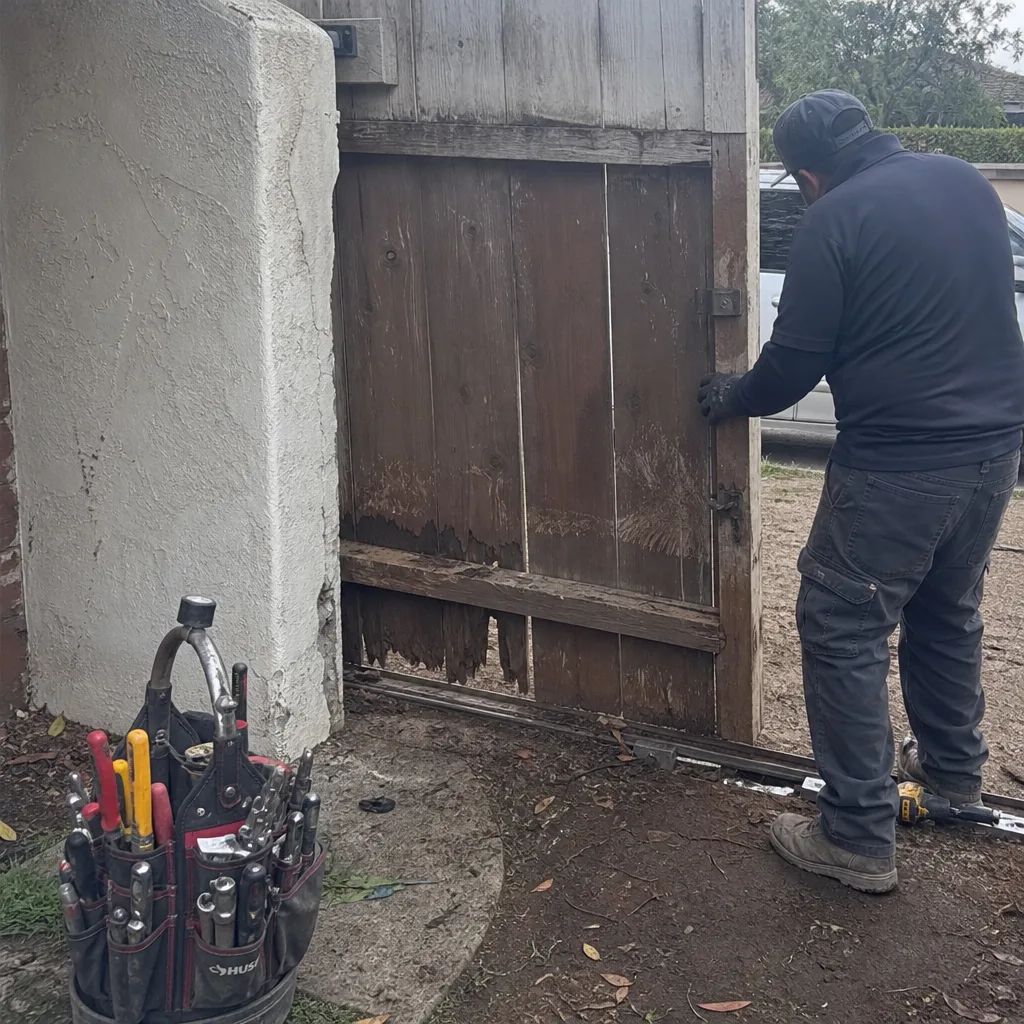 Before
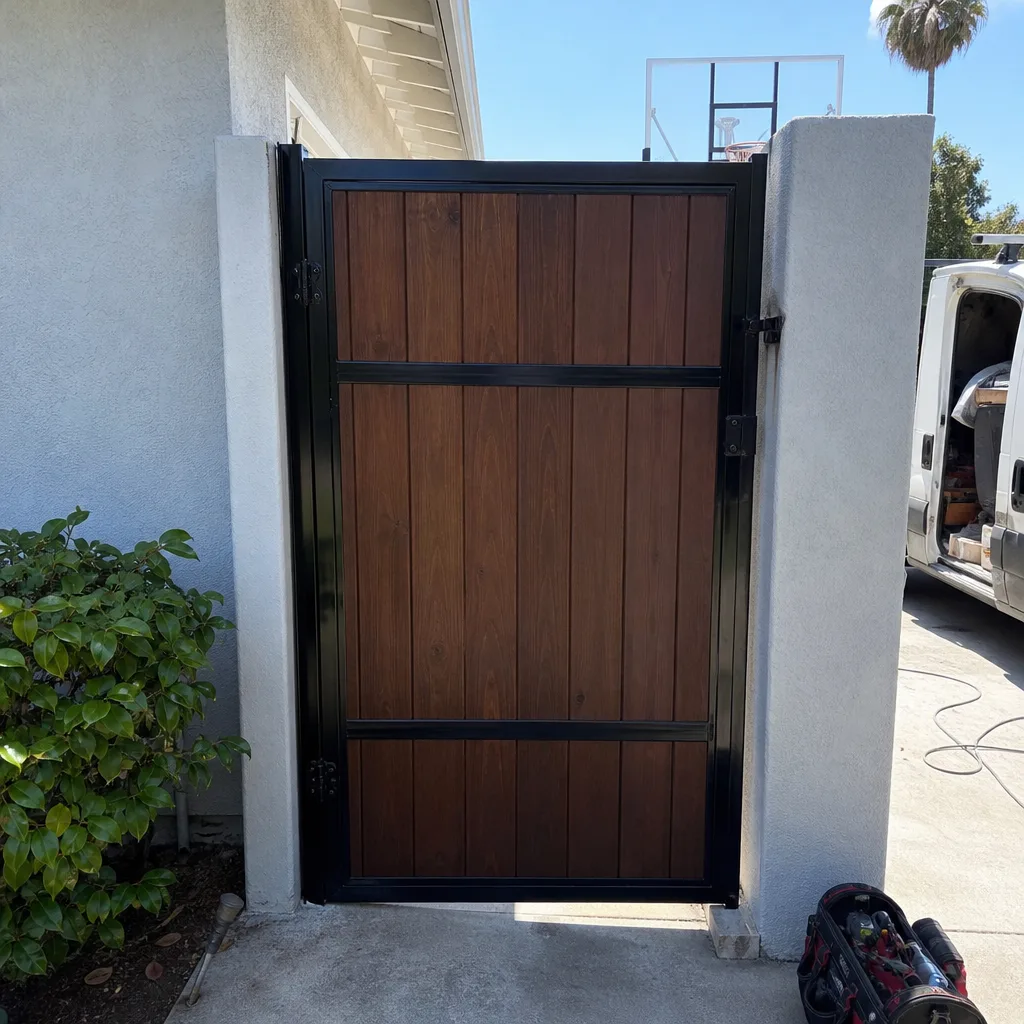 After
After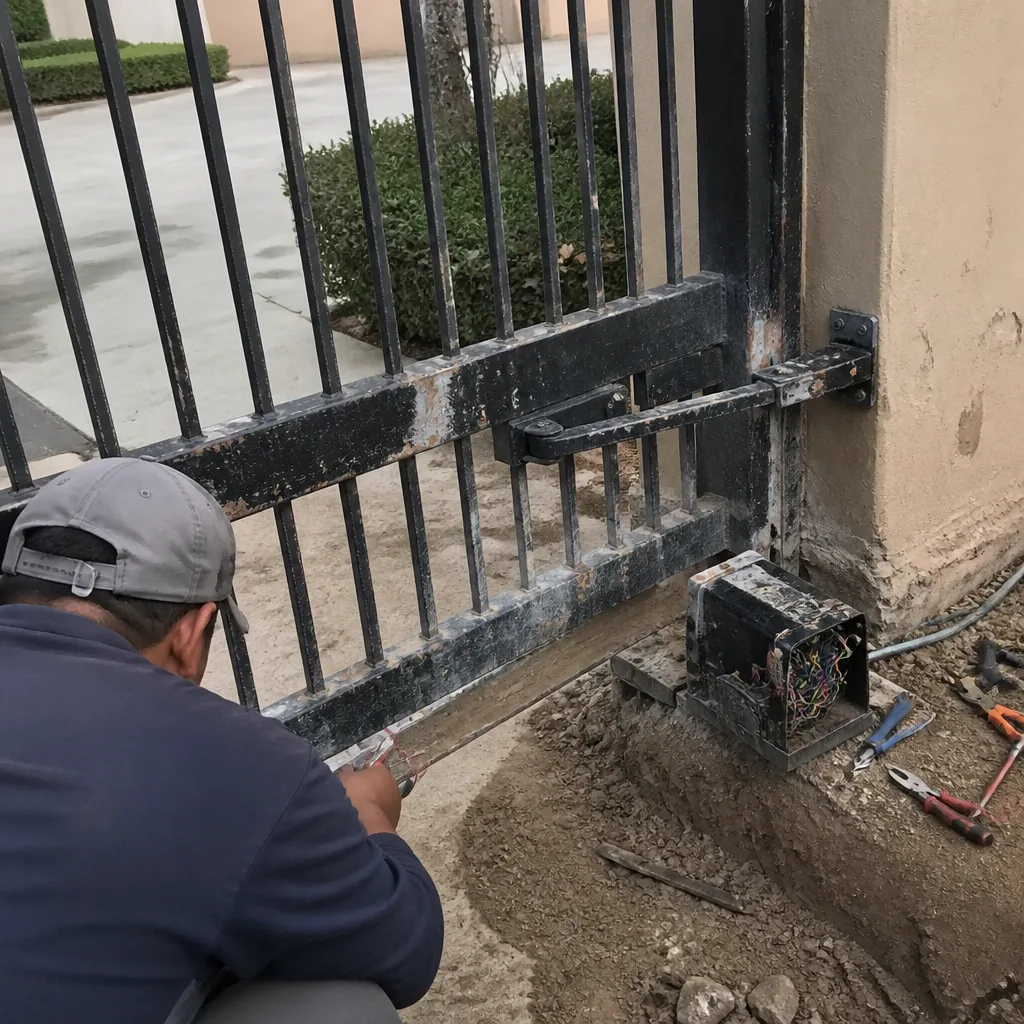 Before
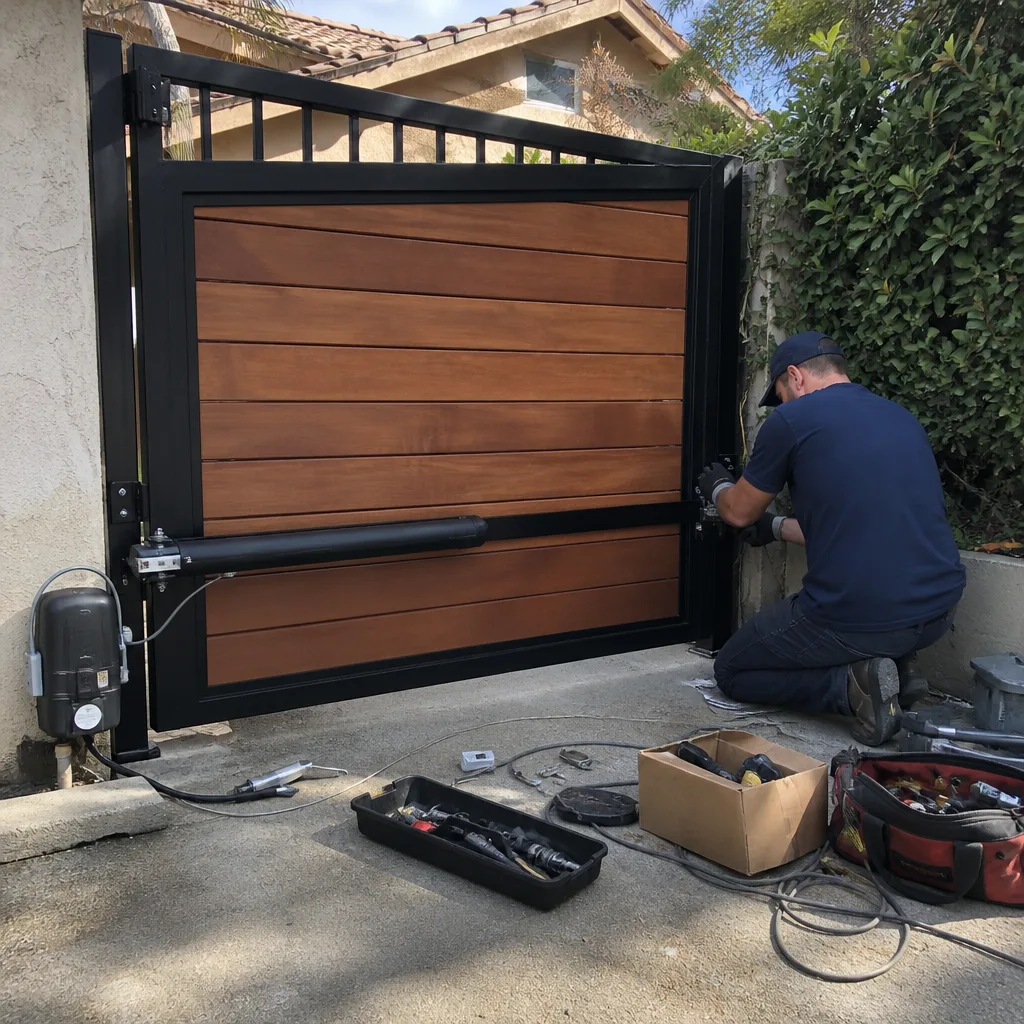 After
After Before
 After
After