
Last updated October 16, 2026
Free on-site gate assessment - hinges, posts, and your LiftMaster or Nice gate operator checked before anything is quoted
The assessment is free and the quote is the invoice.
Get your free estimateDIY vs Professional Gate Repair: The San Diego Homeowner’s Decision Guide
Here’s a fact most San Diego homeowners don’t learn until it’s too late: the federal safety standard for automatic gate operators, UL 325, requires any adjustment to entrapment protection devices to be performed and documented by a qualified installer. That means a well-intentioned DIY tweak to your gate’s safety reversal sensor, the thing that keeps a 600-pound gate from crushing a child or pet, can legally expose you to liability if someone is injured afterward. This guide walks through exactly which gate repairs are safe for a homeowner to attempt, which ones require a trained technician, and how to calculate the real cost of a DIY fix gone wrong in San Diego’s coastal climate.
Styles & brands we work with
- Wrought iron
- Wood & steel frame
- Farm & ranch
- Sliding driveway gates
- LiftMaster operators
Quick Answer
DIY gate repair in San Diego is genuinely safe for four low-risk tasks: lubricating hinges and rollers, replacing remote batteries, clearing debris from a slide gate track, and resetting a tripped breaker. Everything involving the gate operator’s electrical system, UL 325 entrapment protection, operator mounting, or structural post footings should go to a professional. A middle category exists for limit switches, loop detectors, and control board programming where DIY is possible but risks voiding your operator’s warranty, and in many cases a botched attempt costs more than calling a San Diego gate repair company from the start.
Table of Contents
- The DIY-Safe Category: Four Repairs Any Homeowner Can Handle
- The Professional-Required Category: Where DIY Becomes a Liability
- The Middle Category: Possible, but It May Void Your Warranty
- The Real Cost of a DIY Attempt That Fails
- Why San Diego’s Climate Changes the Repair Equation
- What to Tell a Gate Repair Company After a DIY Attempt
- Common Mistakes to Avoid
- When to Call a Professional
- Frequently Asked Questions
- The Bottom Line
The DIY-Safe Category: Four Repairs Any Homeowner Can Handle
Not every gate problem requires a service call. In our experience across San Diego neighborhoods from Chula Vista to Rancho Bernardo, we see four recurring maintenance items that homeowners can safely manage on their own, assuming they have basic tools and reasonable caution. These tasks don’t involve electrical components, don’t affect the operator’s safety systems, and won’t void any manufacturer warranty.
1. Lubricating Hinges and Rollers
Metal gates in San Diego sit in salt air if you’re within a few miles of the coast, or dry desert heat if you’re east of the 15. Both conditions wear out lubrication faster than most homeowners expect. A gate that squeals or shudders when opening usually just needs a proper lubricant, not a new operator. Use a lithium-based grease on hinge pins and a silicone spray on roller bearings. Avoid WD-40; it breaks down existing grease and leaves metal unprotected. Do this every 90 days in coastal neighborhoods like Point Loma, La Jolla, or Pacific Beach, and every 6 months inland.
2. Replacing a Dead Remote Battery
If your remote stops working but the keypad or interior button still opens the gate, the remote battery is almost always the culprit. Slide-off cases take a standard coin cell battery, typically CR2032. The whole job takes two minutes, costs under $5, and requires no tools beyond a fingernail. If a new battery doesn’t fix it, the remote itself may need reprogramming, which is a slightly different task that often requires the operator’s specific programming sequence. That’s where you should pause and consider whether you know your operator’s brand and model. LiftMaster, FAAC, BFT, Linear, and Viking all use slightly different programming steps, and a manual is often required.
3. Clearing Debris from a Slide Gate Track
Slide gates in San Diego accumulate leaves, eucalyptus bark, and construction dust that drifts from canyon areas like Mission Valley and Clairemont. When a slide gate strains or stops midway, the first thing to check is the track. Sweep out loose debris with a broom, then check for anything wedged in the rollers. A rubber mallet can dislodge small pebbles. This is a five-minute fix that often solves what looks like an operator failure. The catch: if the track itself is bent or the wheels have worn flat spots, sweeping won’t fix the underlying problem, and continuing to run the gate will damage the operator. That scenario moves into professional territory.
4. Resetting a Tripped Breaker
Gate operators run on dedicated circuits, and in older San Diego homes with aging panels, those breakers trip more often than newer neighborhoods like Otay Ranch or 4S Ranch. Find the breaker labeled “gate” or “gate operator” and flip it fully off, then back on. If the gate works afterward, the breaker was the issue. If it trips again within days, don’t keep resetting it. A breaker that trips repeatedly is telling you there’s a wiring fault, a failing capacitor, or a motor drawing too many amps. All three require a professional diagnosis, and repeated resets risk fire or permanent damage to the operator.
These four tasks account for perhaps 20% of the service requests we see in San Diego. The other 80% of gate failures involve components that are either dangerous to work on or legally restricted.
The Professional-Required Category: Where DIY Becomes a Liability
This is where the decision stops being about skill and starts being about legal exposure and physical risk. UL 325, the federal safety standard governing automatic gate operators since 2000, explicitly requires that adjustments to entrapment protection devices be performed and documented by a qualified installer. The reasoning is straightforward: an automatic gate is a machine that can crush, pin, or entrap a person or animal, and the sensors that prevent that outcome are safety devices, not convenience features. When a homeowner adjusts them without proper training and testing equipment, the gate can appear to work normally while silently lacking the protection it’s supposed to provide.
UL 325 Entrapment Protection Components
These are the specific components that fall under UL 325’s qualified-installer requirement:
- Photoelectric sensors (photo eyes): the small devices mounted near the gate’s base that project an invisible beam across the opening. If the beam breaks, the gate reverses. A misaligned or bypassed sensor means a gate that won’t reverse when a child or pet crosses the threshold.
- Contact edges and pressure strips: the rubber edge mounted on the leading gate panel that reverses the gate if it touches an obstruction. These require calibration to match the operator’s sensitivity settings.
- Inherent entrapment protection: some newer operators use built-in obstruction detection that monitors motor load rather than external sensors. Adjusting sensitivity on these without the manufacturer’s test procedure can leave the gate either too weak to close or too forceful to be safe.
- Warning signage and alarm requirements: UL 325 has signage requirements that many San Diego homeowners don’t know exist. A professional installs and verifies the correct signage placement as part of the compliance check.
Beyond entrapment protection, electrical wiring and operator mounting also belong in the professional category. Gate operators run on 110V or 220V circuits, and in many San Diego properties those circuits were added after the original construction. We’ve seen wiring in Rancho Santa Fe estates that was installed without conduit, connections made with wire nuts that have corroded in coastal salt air, and operators mounted to posts that were never reinforced for the load. None of these are visible from the outside, and none are safe for a homeowner to diagnose without opening a live electrical enclosure.
Post-footing work is the other structural item that should never be a DIY project. A swing gate weighing 400 to 800 pounds applies constant torque to its hinge posts. If a post shifts, the gate sags, the operator strains, and eventually the hinge welds crack or the post foundation fails. Re-seating a gate post in San Diego requires digging out the old footing, pouring new concrete that meets the load requirements for the gate’s weight and wind exposure, and often installing a steel insert that reinforces the post. This is a job for concrete tools, leveling equipment, and an understanding of load vectors, not a weekend project.
The Middle Category: Possible, but It May Void Your Warranty
Between the clearly safe and the clearly dangerous sits a gray zone. These are repairs a technically-inclined homeowner can physically perform, but doing so may have consequences that aren’t obvious until later. The key question for this category is: what does your operator’s warranty say about unauthorized adjustments?
Most gate operator manufacturers, including BFT, LiftMaster, Viking, and Ghost Controls, write their warranties with language that excludes damage caused by “unauthorized modification or adjustment.” That’s broad language, and manufacturers have enforced it. If you adjust a limit switch, get it wrong, and burn out the motor, the manufacturer’s warranty typically won’t cover the replacement. If a certified technician makes the same adjustment and the motor fails anyway, the warranty applies. That’s the practical difference.
Tasks in the Middle Category
- Limit switch adjustment: limit switches tell the operator when to stop opening and closing. If the gate slams or doesn’t close fully, the limit switches need adjustment. This involves opening the operator housing, working near live electrical components, and using a screwdriver to turn small potentiometers or reposition microswitches. It’s not complicated, but getting it wrong means a gate that overtravels and damages its own mechanism.
- Loop detector sensitivity tuning: loop detectors sense vehicles and keep a gate from closing on a car. Sensitivity adjustments involve small trim pots inside the detector housing. An overcranked loop can trigger falsely; an under-cranked loop won’t detect a carbon-fiber or motorcycle. Most San Diego driveways with asphalt or concrete have loops embedded in the surface, and they degrade differently in wet winters versus dry summers.
- Control board programming: adding a new remote, changing auto-close timing, or setting vacation mode requires entering the control board’s programming sequence. The sequence differs by brand and sometimes by model year within the same brand. A homeowner who can follow the manual’s button-press sequence can usually do this. A homeowner who throws away manuals or guesses will end up with a gate that behaves unpredictably.
Our recommendation on the middle category: if you’re comfortable reading a manual and you own the manual for your specific operator, limit switch and programming tasks are approachable. If you don’t have the manual, or the gate’s behavior after your adjustment seems even slightly off, stop and call someone. The cost of diagnosis after a failed DIY attempt is often higher than the original repair would have been.
The Real Cost of a DIY Attempt That Fails
Here’s a scenario we encounter regularly in San Diego, and it’s rarely discussed in online advice columns. A homeowner in Poway or Scripps Ranch notices their gate is slow to open. They watch a video, open the operator housing, adjust something, and the gate now doesn’t open at all. They call a gate repair company. The technician arrives and discovers the homeowner has rewired the capacitor, bypassed a limit switch, or recalibrated the force setting so far out of range that the operator needs to be manually reset to factory defaults before diagnosis can even begin.
The bill for that service call now includes:
- Diagnostic time to undo the DIY work: 30 to 60 minutes of labor at San Diego gate repair rates, typically $85 to $125 per hour.
- Replacement parts if the DIY attempt damaged a component: capacitors run $20 to $60, control boards $150 to $450, limit switch assemblies $40 to $120.
- The cost of the original repair: which was probably a $150 to $300 fix before the DIY attempt, now performed correctly.
Realistically, a failed DIY attempt on a gate operator adds $100 to $300 to the final invoice compared to calling a professional first. In the worst cases, where a homeowner has damaged the control board or the motor, the added cost exceeds $500. That’s the hidden cost of DIY in this trade: the most expensive repair is the one where we get paid to undo someone else’s work, then do the job correctly.
The same math applies to electric gate repair in San Diego, where the electrical and safety components add another layer of complexity. A capacitor holds a charge even after the power is off, and discharging it incorrectly is a genuine shock hazard.
Why San Diego’s Climate Changes the Repair Equation
San Diego’s climate gets called “mild” so often that homeowners underestimate what it does to gate hardware over a decade. The reality is more nuanced, and it varies by neighborhood.
Coastal neighborhoods like La Jolla, Del Mar, Encinitas, and Coronado deal with salt-laden air that corrodes exposed metal. Hinges rust from the inside out. Photo eye lenses develop a film that blocks the beam. Limit switch contacts corrode and stop making reliable connections. A homeowner lubricating hinges in Point Loma is doing real preventive maintenance. A homeowner opening an operator housing in Del Mar and spraying contact cleaner on a corroded control board is flirting with a short circuit.
Inland neighborhoods like Santee, El Cajon, and Lakeside deal with heat and dust. Operators mounted in direct sun absorb heat that degrades capacitors faster than coastal units. Dust works into roller bearings and loop detector housings. A gate that works fine at 10 a.m. may refuse to open at 3 p.m. in July because the thermal overload inside the motor has tripped. That’s a diagnosis that requires a technician who understands the specific operator, not a homeowner following a generic troubleshooting guide.
San Diego’s canyon winds also matter. Homes in Mission Hills, Bankers Hill, and Linda Vista sit on slopes where a gate becomes a wind sail. An improperly balanced swing gate in a windy canyon puts stress on the operator every single day. That stress translates into early motor failure, which is expensive. A proper gate repair in San Diego includes evaluating wind load and post integrity, factors that most DIY video tutorials never mention.
What to Tell a Gate Repair Company After a DIY Attempt
This section matters more than most homeowners realize. When you’ve already opened the operator, adjusted something, or replaced a part, the repair company needs to know before the technician arrives. Not because we’re judging, but because the diagnostic process changes entirely.
Here’s exactly what to tell the dispatcher or tech when you schedule the call:
- Be specific about what you touched: “I opened the operator and turned the limit switch screw” is far more useful than “I tried to fix it.” Specific descriptions let the tech bring the right tools and anticipate what’s been changed from factory settings.
- Say whether the gate changed behavior after your attempt: “It worked before, now it doesn’t respond at all” points to a disconnected wire or a tripped internal fuse. “It opens but won’t close” suggests a force setting or photo eye issue.
- Mention if you replaced any parts: if you installed a new battery in the operator, a new capacitor, or a universal remote you bought online, say so. Universal remotes often use different frequencies than the operator’s receiver, and a mismatch can mimic a receiver failure.
- Admit if you disconnected any wires: this is the critical one. If a homeowner disconnected a wire and reconnected it to a different terminal, the tech needs to check every connection before applying power. Not saying so risks a short circuit that damages the control board.
- Don’t hide the DIY attempt: technicians figure it out within minutes anyway. A housing that’s been opened shows tool marks. A limit switch that’s been adjusted sits at an angle the factory never produces. Being upfront saves diagnostic time, which saves you money.
At Portcullis Gate Repair San Diego, we’d rather hear the full story before we arrive. It changes how our technicians approach the job, and it means the written price you get reflects the actual work required, not a guess that gets revised upward later. That’s the point of the written price before any work starts: it works when the tech knows what he’s walking into.
Common Mistakes to Avoid
- Spraying WD-40 on control boards or electrical contacts: WD-40 is not a contact cleaner and leaves a residue that attracts dust and eventually shorts connections. Use it nowhere near electronics.
- Forcing a gate open manually when the operator is engaged: most San Diego operators have a manual release, usually a handle or key, that disengages the drivetrain. Pushing a 600-pound gate against a locked operator destroys gears and costs $200 to $600 in parts.
- Bypassing a photo eye because the gate “works fine without it”: this is the most dangerous mistake we see in San Diego. The photo eye and contact edges are the only things preventing a gate from crushing whatever is in its path. Bypassing one is a UL 325 violation and a liability you carry personally.
- Replacing a broken hinge with a gate hinge from a hardware store, not a weld-on gate hinge: big-box store hinges are sized for pedestrian gates and screen doors. A 500-pound automatic gate will shear them in weeks.
- Adjusting the force setting to maximum to overcome a mechanical problem: if the gate is hard to open because a roller has failed or a hinge is seized, cranking the force setting masks the problem while dramatically increasing the crush force. This is the exact scenario UL 325 was written to address.
- Ignoring a tripping breaker because “it resets fine”: a breaker that trips repeatedly is diagnosing a problem for you. Each reset is a second chance for an electrical fire in an aging San Diego panel.
- Buying a universal remote without checking the operator’s frequency: most San Diego gates run on 318 MHz or 390 MHz, and universal remotes only work on one. A mismatched remote leaves a homeowner convinced the receiver is bad, when the real fix is a $40 brand-matched remote.
When to Call a Professional
Call a professional when the gate problem involves the operator’s electrical system, any UL 325 safety component, a shifting post, a visibly sagging gate, or a problem that persists after a reasonable DIY attempt at the safe category. If the gate makes a noise it didn’t make before, heats up, smells like melting plastic, or moves at a different speed, those are systematic failures, not lubrication issues. Portcullis Gate Repair San Diego offers free estimates in San Diego and the surrounding county, and every estimate is written before any work begins. Call (619) 793-3558 and you’ll speak to a live person who can schedule a technician with experience on your specific operator brand. We also handle gate installation in San Diego for homeowners whose gate has reached the point where repair no longer makes economic sense.
Frequently Asked Questions
Gate repair in San Diego typically costs $150 to $450 for most mechanical and electrical repairs, with operator replacement running $800 to $1,800 installed. Specific costs: hinge replacement $100 to $250, limit switch adjustment $85 to $150, control board replacement $350 to $650, full operator swap $900 to $1,600 depending on the operator’s size and brand. Prices include parts and labor for most residential gates in the San Diego area. Call (619) 793-3558 for a written price on your specific gate.
You can perform basic maintenance like lubrication, remote battery replacement, track cleaning, and breaker resets without any special knowledge or tools. Any task involving the operator’s wiring, motor, control board, or UL 325 safety components should go to a qualified technician, both for safety and to keep your manufacturer’s warranty intact.
The most common gate failure in San Diego is photo eye misalignment and corrosion, followed closely by limit switch drift. The salt air near the coast and the extreme heat inland both contribute to these failures. In our experience, about 40% of San Diego gate service calls involve an entrapment protection fault rather than a mechanical failure.
Homeowner’s insurance covers a gate damaged by a covered peril, like a vehicle impact or a storm-felled tree, but not wear-and-tear or mechanical failure. Some San Diego policies have specific exclusions for automatic gate operators. If someone is injured by your gate after a DIY repair to a safety component, your insurance may deny the claim and the liability can fall on you personally.
A quality residential gate operator in San Diego should last 8 to 15 years with proper maintenance. Coastal installations tend to fail earlier than inland ones due to salt corrosion on electrical components. Operators that run 20 or more cycles per day, common in San Diego homes where multiple family members come and go, wear out faster than the manufacturer’s cycle ratings suggest.
We service nine major gate operator brands: LiftMaster, FAAC, BFT, Linear, Viking, Ghost Controls, DoorKing, Elite, and Mighty Mule. A technician who knows your specific system arrives the first time, without the learning curve that comes from a generalist who’s seeing your operator for the first time. Call (619) 793-3558 to schedule.
The Bottom Line
The DIY versus professional gate repair question has a clear answer for most San Diego homeowners. You can safely handle the four low-risk tasks: lubricating, replacing remote batteries, clearing track debris, and resetting breakers. Everything else, especially anything touching UL 325 entrapment protection, electrical wiring, operator mounting, or post structure, belongs with a certified technician. The middle category of limit switches, loop detectors, and programming is where homeowner judgment matters most, and where a wrong decision voids warranties and adds cost. When in doubt, the written estimate is free, and a live person answers the phone 24/7 at Portcullis Gate Repair San Diego; see our more guides & resources for additional help. That’s what we’ve offered since 2008, and it’s the standard behind every Kingswell company.
Written by Dean Prescott, Owner at Portcullis Gate Repair San Diego, serving San Diego since 2008.
See the difference
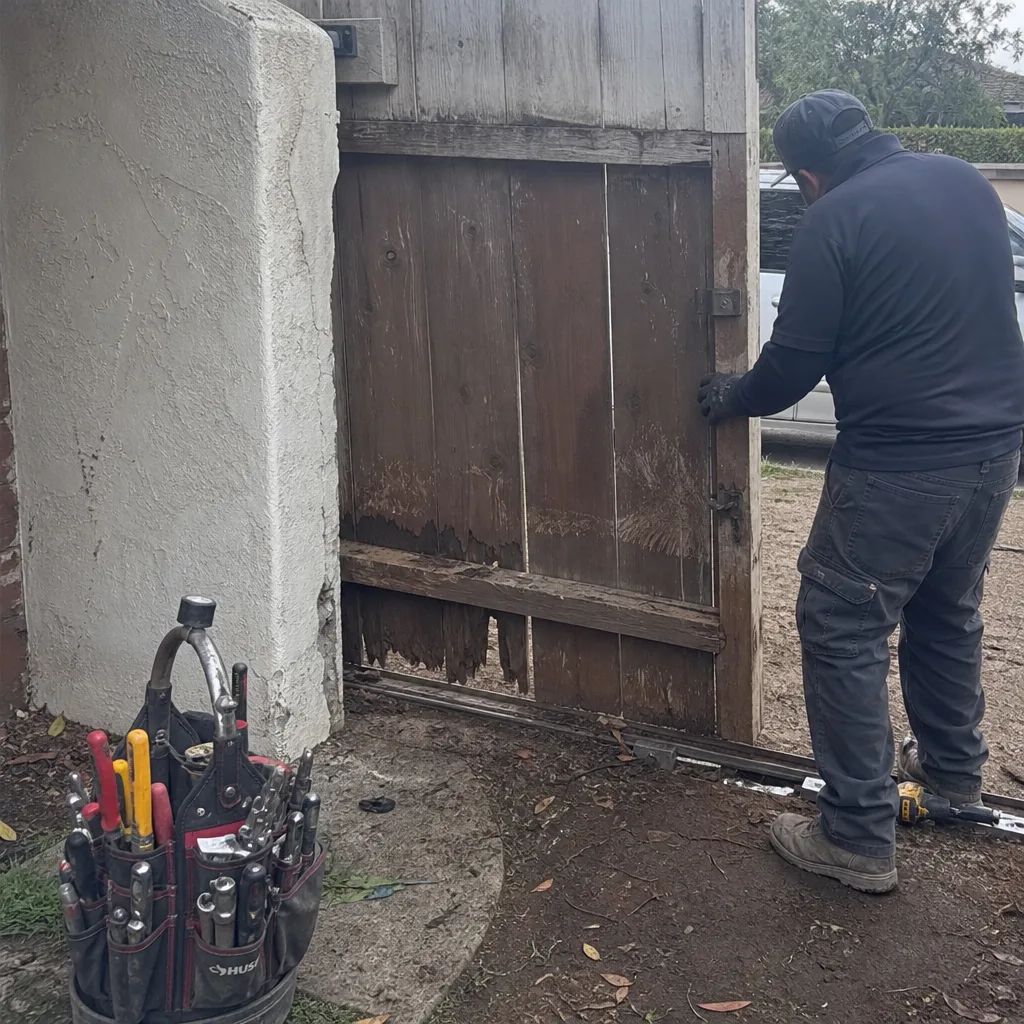 Before
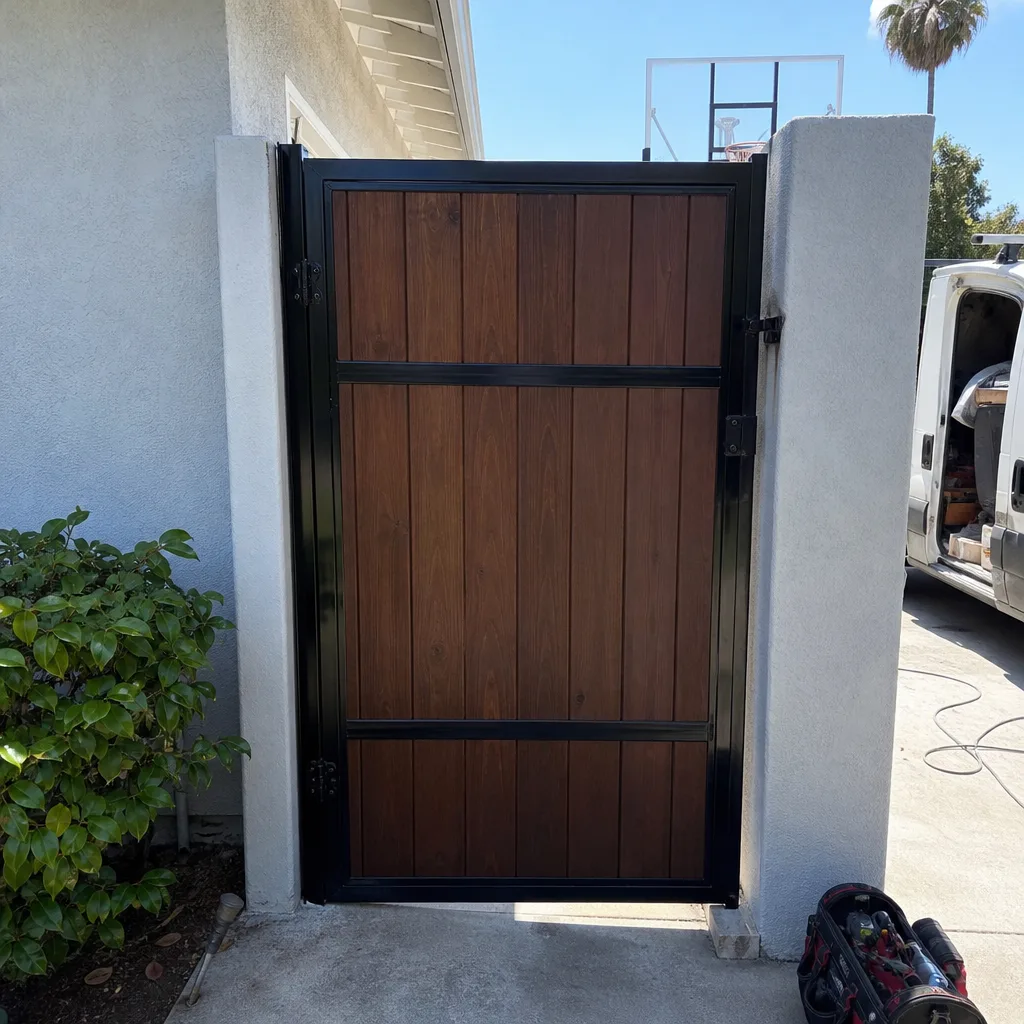 After
After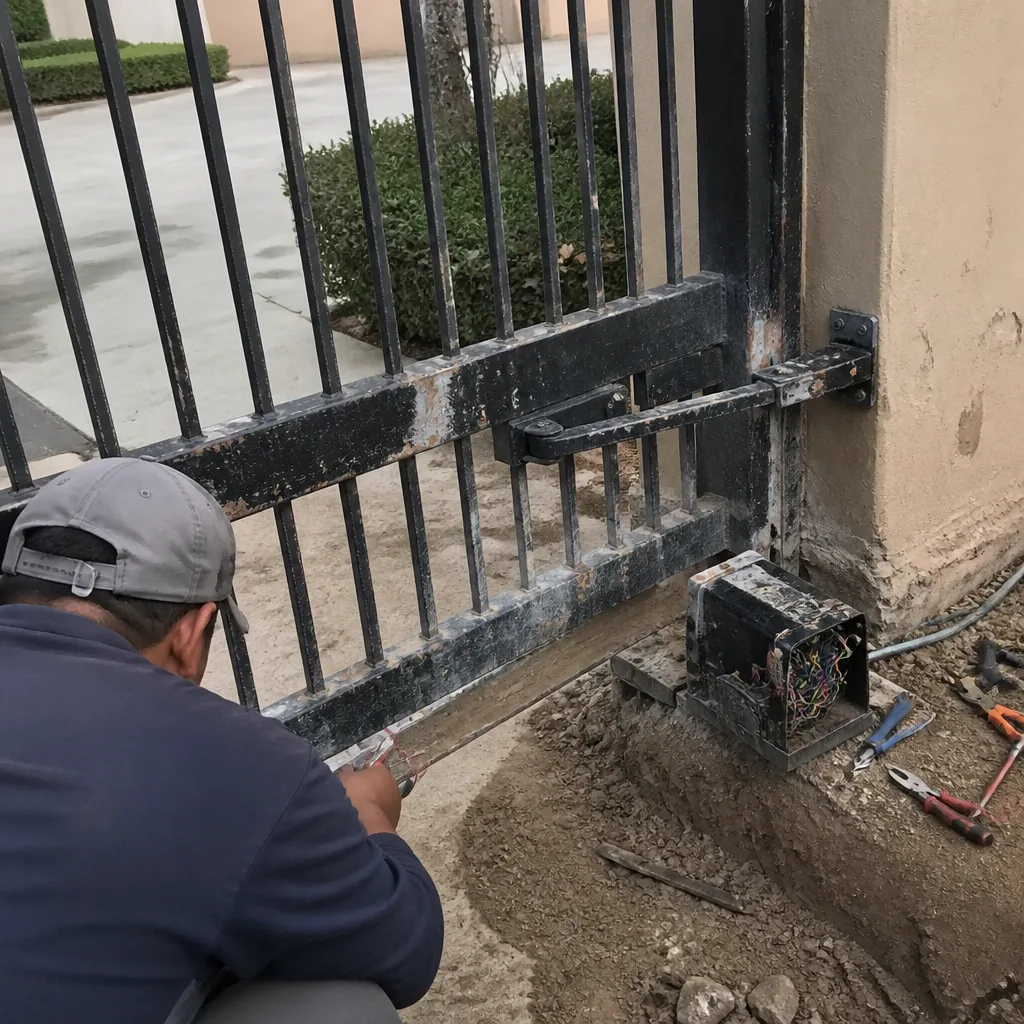 Before
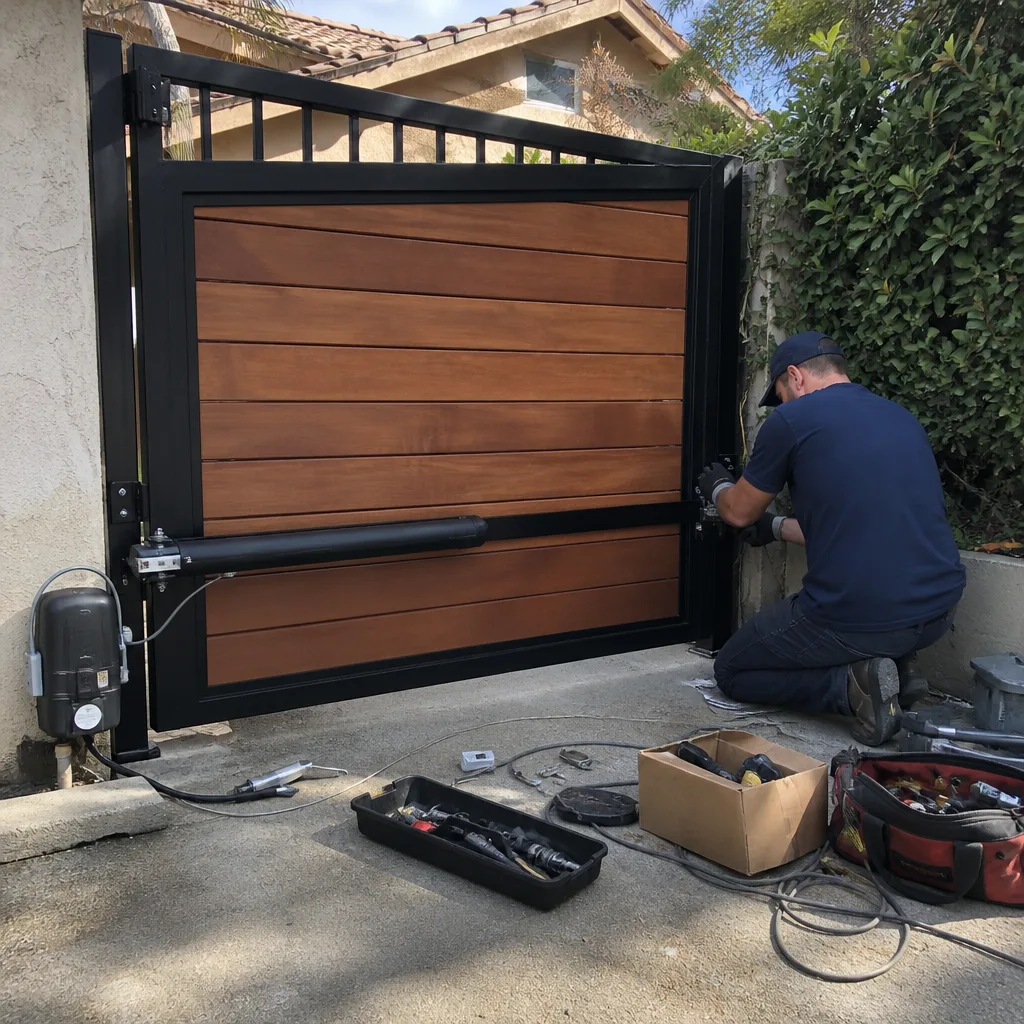 After
After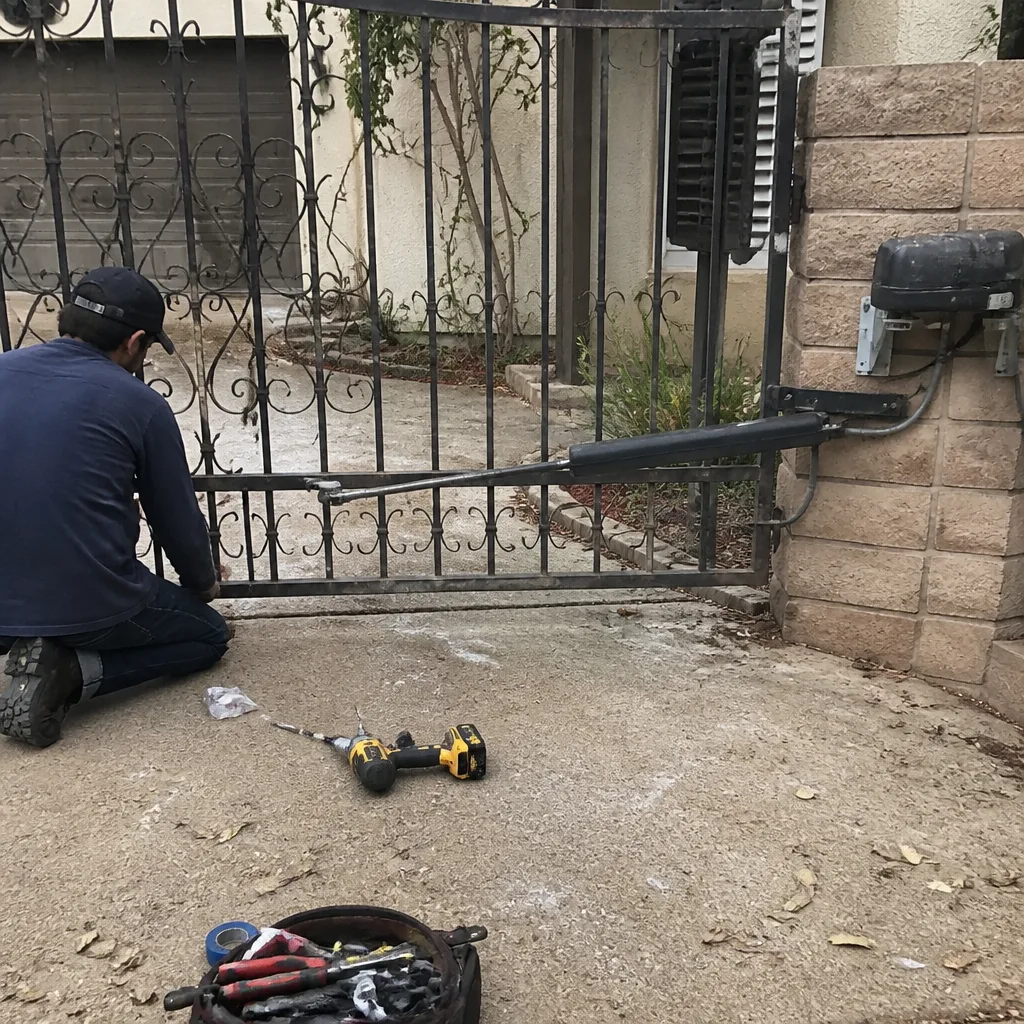 Before
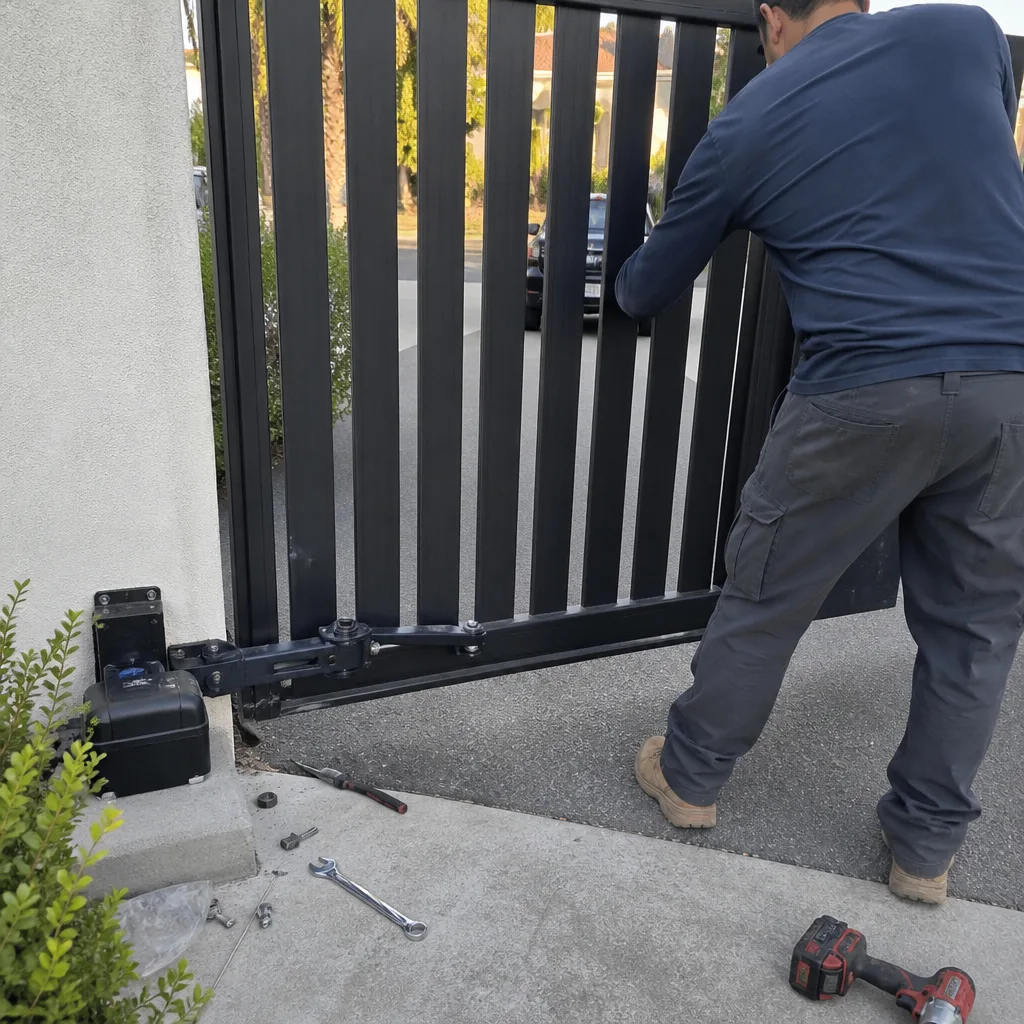 After
After