
Last updated October 16, 2026
Free on-site gate assessment - hinges, posts, and your LiftMaster or Nice gate operator checked before anything is quoted
The assessment is free and the quote is the invoice.
Get your free estimateThe Complete Guide to Gate Repair in San Diego
San Diego’s coastal air carries enough salt particulate to accelerate steel oxidation up to four times faster than inland cities like Phoenix or Dallas, yet most more guides & resources treat the city as if it were a generic suburb. That oversight is exactly why so many San Diego homeowners replace the same hardware twice. This guide explains the three root causes behind most gate failures in our region: hardware fatigue from salt-air corrosion, foundation shift from clay-heavy soil, and undersized motors carrying more gate weight than they were built for. By the time you finish reading, you’ll know how to diagnose your gate’s problem before making a single phone call, what a fair written quote should itemize, and when repairing beats replacing.
Styles & brands we work with
- Wrought iron
- Wood & steel frame
- Farm & ranch
- Sliding driveway gates
- LiftMaster operators
Quick Answer
Gate repair in San Diego typically costs between $180 and $480 for common mechanical fixes like hinge replacement or latch adjustment, while electric gate repairs involving control boards or actuator swaps usually run $350 to $1,200. The single most important decision you’ll make is whether to repair the existing hardware or replace the gate entirely, and that decision depends on which of three root causes you’re dealing with: corrosion, foundation movement, or an undersized motor. A reputable San Diego gate company should diagnose the cause, put the price in writing before starting, and back our Gate Repair services with a written guarantee.
Table of Contents
- The Three Root Causes Behind Most San Diego Gate Problems
- Mechanical vs. Electrical vs. Structural: How to Diagnose Before You Call
- Hardware Grades: Residential vs. Commercial Duty and Why It Matters
- San Diego’s Micro-Climate Zones and What They Do to Gates
- What a Written Price-Before-Work Quote Should Itemize
- The Repair-Versus-Replace Decision Tree
- What to Expect During a Gate Repair Visit
- Common Mistakes to Avoid
- When to Call a Professional
- Frequently Asked Questions
- The Bottom Line
The Three Root Causes Behind Most San Diego Gate Problems
Most gate failures in San Diego trace back to one of three things, and knowing which one you’re dealing with determines every repair decision that follows. Treating a foundation problem with a new hinge, or a corrosion problem with a bigger motor, just delays the next call and runs up the bill.
1. Salt-Air Corrosion and Hardware Fatigue
Coastal neighborhoods like La Jolla, Point Loma, Ocean Beach, and Coronado sit in a near-constant salt spray. That salt settles into hinge pins, roller bearings, latch assemblies, and every exposed fastener. Within three to five years, you’ll typically see pitting on zinc-plated steel, seized pivots, and sheared bolts. The gate still looks fine from the street, but the hardware is quietly failing from the inside out. In our experience, corrosion accounts for roughly half of all mechanical gate repairs we perform in San Diego’s coastal band.
2. Foundation Shift from Clay-Heavy Soil
Move inland to neighborhoods like Clairemont, Mission Valley, Rancho Peñasquitos, or El Cajon, and you’re riding on expansive clay soils that swell in winter rains and shrink through the dry season. That seasonal movement tilts gate posts, throws hinges out of alignment, and causes the gate to drag or bind. A gate that swings fine in October might refuse to latch by February. You can’t fix this by adjusting the gate; the post bed has to be addressed, usually with a deeper footing or a concrete collar. Ignoring post lean means every other repair is temporary.
3. Undersized Motors for Actual Gate Weight
This is the quiet killer of electric gate systems. Builders and previous owners often spec a slide gate operator by price, not by the true weight of the moving leaf. A motor rated for 600 pounds attached to a gate that actually weighs 900 pounds will run hot, blow through capacitors, strip gears, and eventually burn out. We see this constantly in electric gate repair in San Diego, especially on custom ornamental steel gates that look light but carry a lot of mass. The fix is either a properly sized operator or retrofitting the gate with lighter infill material.
Mechanical vs. Electrical vs. Structural: How to Diagnose Before You Call
Before you pick up the phone, spend five minutes figuring out which category your problem falls into. It will save you time on the call and help you evaluate what the technician tells you when they arrive.
Mechanical Problems (Hinges, Rollers, Latch, Track)
- Symptoms: Gate scrapes the ground, sticks at a certain point, won’t close fully, makes a grinding or squealing noise when moving, latch won’t engage.
- Common causes: Worn hinge bearings, flattened rollers, bent track sections, rusted latch springs, misaligned catch posts.
- Signal check: If the gate moves but fights you, or moves by hand but not by motor, you’re usually dealing with mechanical resistance.
Electrical Problems (Control Board, Loop Detector, Receiver, Power Supply)
- Symptoms: Gate won’t move at all, opens but won’t close, closes halfway and reverses, keypad doesn’t work, remote works intermittently, tripped breaker.
- Common causes: Burned control board, failed loop detector sending a constant “vehicle present” signal, dead receiver module, corroded wire nuts in the junction box, blown transformer.
- Signal check: If the gate responds inconsistently or not at all, and the manual disconnector lets you move it freely, the electrical system is the likely culprit.
Structural Problems (Post Lean, Concrete Heave, Rail Sag)
- Symptoms: Gate visibly tilts, gaps between gate and post change with the seasons, concrete around the post base is cracked, slide rail has a visible dip or bow.
- Common causes: Clay soil expansion and contraction, degraded post footing, rusted post base below grade, heavy gate weight on undersized posts.
- Signal check: If the gate geometry looks wrong, or you can see daylight between the gate and post where there used to be none, you have a structural issue.
Here’s a simple diagnostic sequence we use with customers over the phone:
- Disengage the operator using the manual release lever. Push the gate by hand through its full travel.
- Feel for resistance. If it drags, binds, or grinds by hand, the problem is mechanical or structural. If it moves smoothly, the problem is likely electrical.
- Check the power. Is the breaker on? Are the photocell lenses clean? Is there any sign of rodent damage to exposed wiring?
- Watch the reversal behavior. If the gate starts to close and immediately reverses, it’s likely seeing a false obstruction signal, either from the safety edges, photocells, or a faulty loop detector.
- Look at the posts. Are they plumb? Check with a level if you have one. Post lean of more than a degree or two explains a lot of hinge and latch problems.
Hardware Grades: Residential vs. Commercial Duty and Why It Matters
The most common reason a “new” gate fails within two years in San Diego is undersizing. Contractors install residential-grade hardware on a gate that demands commercial duty, usually because the lighter hardware costs less and fits the bid. It works for a year, then the bearings start to compress, the hinges sag, and the operator strains against the extra friction.
Here’s the distinction that actually matters:
- Residential-grade hinges are typically rated for gates up to 300 – 600 pounds and 2,000 – 5,000 open/close cycles. Fine for a light aluminum driveway gate in a low-traffic cul-de-sac.
- Commercial-duty hinges are built for gates up to 1,000 – 1,500 pounds and 50,000 – 100,000 cycles. They use sealed ball bearings instead of bushings, heavier gauge steel, and larger pin diameters.
- Residential slide-gate rollers are often nylon or small steel wheels rated for 800 pounds. Commercial rollers are cast iron, run on shielded bearings, and carry 2,000 pounds or more.
- Operators matter more than anything else. A swing-gate actuator sized for 400 pounds will destroy itself on an 800-pound gate in 18 months or less. We spec operators by actual leaf weight, plus wind load, plus cycle frequency – not by what’s cheapest on the shelf.
When a Portcullis Gate Repair technician assesses your gate, the first measurement we take is actual moving weight. A steel gate with ornamental scrollwork in Rancho Santa Fe can easily weigh 700 to 900 pounds, even if it’s only 12 feet wide. That weight dictates the hardware class, the operator size, and the post footing depth. Undersizing any one of those three components shortens the life of the entire system.
San Diego’s Micro-Climate Zones and What They Do to Gates
San Diego isn’t one climate. It’s a patchwork of micro-zones that treat gate hardware very differently depending on where your property sits. Understanding your zone helps you anticipate failures before they strand you at the driveway.
The Coastal Band (La Jolla, Point Loma, Ocean Beach, Corona Del Mar)
Persistent marine layer, salt aerosol, and high humidity year-round. Expect rapid corrosion on zinc-plated hardware, pitting on exposed steel, accelerated rust on any scratch that reaches bare metal. Powder-coated aluminum fares much better than raw or painted steel. Stainless-steel fasteners and sealed hinge bearings are worth the extra cost here. Gates in this zone typically need hardware attention every 3 to 5 years even with proper materials.
The Inland Valleys (Mission Valley, El Cajon, Santee, Poway)
Hot dry summers, cool damp winters, and clay-heavy soils that expand and contract with the seasons. The thermal swing can be 30 to 40 degrees between night and day in summer. Expect post lean, concrete heave, and seasonal latch misalignment. This is where foundation work matters more than hardware upgrades. A properly dug footing with a concrete collar solves most recurring alignment issues in this zone.
The Hillside and Canyon Zones (Rancho Santa Fe, Del Cerro, Mount Helix, Scripps Ranch)
Steep grades, runoff patterns, and shifting fill soil. Gates on hillside properties often deal with drainage issues that erode post footings, plus higher wind loads that stress hinges and operators. Wind load is a real source of actuator strain: a solid-panel gate acting as a sail in a 40 mph Santa Ana gust multiplies the effective force on an operator significantly. Hillside gates need deeper footings, proper drainage falls, and operators sized with wind load in mind.
- Coastal: corrosion control, stainless fasteners, sealed bearings.
- Inland valley: post footings, grade control, seasonal adjustments.
- Hillside: drainage, wind load, deeper posts, heavier operator capacity.
San Diego also carries a specific code note worth knowing: gate designs that incorporate open infill (like picket or ornamental bar gates) generally produce lower wind load penalties than solid privacy panels, which matters more on exposed ridgelines than in sheltered inland lots.
What a Written Price-Before-Work Quote Should Itemize
A proper written quote for gate repair in San Diego should look like a repair invoice you’d want to defend in small claims court: specific, itemized, and priced line by line before any work starts. Any company that won’t put the price in writing before disassembling your gate is telling you something important about how they price the job.
Here’s what a legitimate quote should include:
- Diagnostic fee, if any, and whether it’s waived with the repair. Many companies charge a dispatch fee and then deduct it from the final repair cost if you proceed. That should be stated up front.
- Parts line items with brands or grades. You should see “FAAC swing actuator, model 412” or “commercial-duty steel hinge, sealed bearing, 6-inch” – not just “actuator” or “hinge.” If the brand is missing, ask why.
- Labor hours or flat rates. Either is fine, but the labor number should be specific. “Labor: 2.5 hours at $95/hour” is transparent. “Labor as needed” is not.
- Post or foundation work if required. If the technician suspects post lean, the quote should mention concrete work, footing depth, and cure time. Foundation work is where surprise add-ons hide.
- Disposal fees if applicable. If old hardware or a gate section is being removed, who hauls it and what does it cost?
- Guarantee terms in writing. Not just “guaranteed” – how long, what’s covered, and what triggers a free return visit. Ours is 365 days, written on the invoice, under the 365-Day Done Right Promise.
Red flags that signal price inflation at the door: a quote that says “hardware as needed” without a parts list, a technician who disassembles the gate before giving a final number, a “residential” gate suddenly needing “commercial” hardware with no weight measurement shown, and any technician who can’t tell you the make and model of your operator without taking the cover off. The Kingswell Way exists specifically because these practices are common in the industry: say the price before the work, show up in the window we gave, leave the place cleaner than we found it, put the guarantee in writing, come back if it fails.
The Repair-Versus-Replace Decision Tree
The honest answer to “should I repair or replace?” is a cost-over-time calculation, not an emotional one-read DIY vs Professional Gate Repair: The San Diego Homeowner’s Decision Guide for more context. Here’s the decision tree we walk customers through in San Diego.
- Measure the remaining life of the gate structure. Is the post rusted through at the base? Is the frame sagging because welds are failing? If the underlying structure is sound, repair is usually the better financial call. If the structural members are compromised, you’re throwing money into a sinking foundation.
- Total up the next 5 years of patches. A hinge replacement at $220 now, a latch at $180 in eight months, a roller set at $310 next spring, and an operator swap at $1,100 the year after is $1,810 in repairs – most of it spent on hardware that’s still attached to a failing gate. That money approaches the cost of a mid-range gate installation in San Diego.
- Compare repair cost to 30% of replacement cost. A general rule we use: if a single repair exceeds about 30% of the cost of a full replacement, and the gate is more than 10 years old, replacement deserves a serious look. Under that threshold, repair makes sense.
- Check for upgrades that change the equation. If replacement lets you move to a properly sized motor, powder-coated aluminum instead of painted steel, or a design that cuts wind load in half, the long-term savings can tip the decision.
- Look at the operator separately. Sometimes the best move is to replace the gate leaf but keep a good operator, or replace an undersized operator while keeping a perfectly good gate. A good technician will price both paths and show you the difference.
The reason so many San Diego property owners end up replacing gates they’ve already patched three times is simple: no one showed them the five-year math before the first patch. That’s a conversation worth having before the fourth repair, not after.
What to Expect During a Gate Repair Visit
When you schedule a repair with any reputable San Diego gate company, the visit should follow a predictable pattern. Here’s what a proper diagnostic and repair call looks like, start to finish.
Step 1: Arrival and Walk-Through
The technician should arrive in the window you were given, identify themselves, and walk the gate with you before touching anything. This is when you explain what you’ve observed: the scraping sound, the intermittent remote, the sag on the latch side. A good tech listens first, because your observations are diagnostic gold.
Step 2: Weight and Alignment Check
Before disassembling anything, the technician should check gate weight, post plumb, hinge bearing play, roller condition, and operator model. On electric systems, expect a control board inspection and a look at the loop detector and receiver. A qualified technician doing gate repair in San Diego will check the safety edges and photocells as part of a complete electric gate inspection, because those safety components are the difference between a gate that works and a gate that hurts someone.
Step 3: Written Quote Before Work
This is the moment that separates honest operations from the rest. You should receive a written price, itemized, covering parts, labor, and any scope notes, before a single bolt is turned. If you hired Portcullis Gate Repair San Diego, that’s a Kingswell Guarantee obligation: the price is in your hands before the work starts.
Step 4: The Repair and the Guarantee
The work gets done, the job site gets cleaned, and you receive a written guarantee on the repair. On any Portcullis Gate Repair San Diego job, that guarantee runs 365 days from the repair date. If the same repair fails within that window, the return visit is free under the 365-Day Done Right Promise. That’s the standard every independently owned Kingswell location is bound to, from Chula Vista to Carlsbad.
Common Mistakes to Avoid
- Ignoring post lean. A tilted post makes every hinge, latch, and operator work against gravity. Replacing hardware without addressing the post means the same failure returns within a year in San Diego’s expanding clay soils.
- Buying the cheapest operator. A budget operator rated for 400 pounds on an 800-pound gate will run hot, burn capacitors, and die in 18 months. The second operator plus labor always costs more than one correctly sized motor bought once.
- Skipping the safety-edge check. On any electric gate, the safety edges and photocells are what keep a closing gate from crushing a child, a pet, or a parked car. A disabled or disconnected safety edge is a serious liability.
- Using zinc-plated hardware near the coast. In La Jolla or Ocean Beach, zinc plating fails fast. Stainless steel fasteners and sealed bearing hardware pay for themselves the first time you don’t have to replace them.
- Letting a technician start before pricing. Once the gate is disassembled, your leverage is gone. Always insist on a written quote before any disassembly or parts removal begins.
- Treating all gate companies the same. A company that no-shows, inflates the price at the door, or disappears after a failed fix is common enough in this industry that the entire Kingswell Guarantee structure was built around those exact failures.
- Neglecting the manual release test. Once a quarter, disengage your operator and push the gate manually through its full travel. If it doesn’t move smoothly by hand, you have an early-warning signal of mechanical or structural trouble before it becomes an emergency call.
When to Call a Professional
Call a professional gate technician when the gate won’t open at all, when the operator makes a grinding or clicking sound that wasn’t there before, when the gate reverses unpredictably, when the post is visibly leaning, or when the safety edges or photocells aren’t responding. These are not weekend DIY projects, and an electric gate carries enough force to cause serious injury if a spring, cable, or safety system is handled incorrectly. If your gate is secured by high-tension springs or the operator mounts to a torque arm under load, leave it alone and call someone trained for it. Portcullis Gate Repair San Diego offers free estimates across San Diego, including coastal, inland valley, and hillside neighborhoods. Call (619) 793-3558 and you’ll reach a live person, any hour, any day.
Frequently Asked Questions
Most mechanical gate repairs in San Diego run between $180 and $480, covering hinges, rollers, latches, and alignment work. Electric gate repairs like control board replacement or actuator swaps typically run $350 to $1,200 depending on the operator brand and the size of the gate. So many variables affect the final number-see our Gate Repair Cost Breakdown: The San Diego Homeowner’s Reference for 2026-that the only honest answer is a written quote after the technician sees your gate, which is exactly what you’ll get with Portcullis Gate Repair San Diego. Call (619) 793-3558 for a free estimate.
In many cases, yes. Common mechanical repairs – a seized hinge, a failed latch, a misaligned sensor – are often completed in a single visit. Portcullis Gate Repair San Diego keeps stock of the most common hardware for FAAC, BFT, Linear, and Viking operators on the trucks, which means the fix usually happens on the first trip. Call (619) 793-3558 to schedule or ask about same-day availability.
With Portcullis Gate Repair San Diego, every repair carries a 365-day written guarantee under the 365-Day Done Right Promise. If the repair fails within that period, we send a technician back to make it right at no charge. The guarantee is written on the invoice, not promised over the phone, because that’s the Kingswell Guarantee standard every independently owned Kingswell location is bound to.
Our technicians carry certified service experience on nine major gate-operator brands, including FAAC, BFT, Linear, Viking, Ghost Controls, DoorKing, Elite, LiftMaster, and Mighty Mule. When you call Portcullis Gate Repair San Diego, the technician who arrives already knows the specific system on your property, which saves diagnostic time and gets the repair done faster.
Yes. Portcullis Gate Repair San Diego provides gate installation, gate repair, and electric gate repair for residential and commercial customers across San Diego. If a repair-versus-replace evaluation tells you the smart money is on a new gate, the same technician can spec the new build to match your property’s weight requirements, micro-climate, and operator needs. Gate installation in San Diego starts with a free measure and a written quote.
In San Diego’s clay-heavy inland soils, winter rain saturates the ground around your post footings and causes them to shift or heave. That movement throws the gate out of alignment, binds the hinges, and can trip the operator’s obstruction sensor. Coastal rain also drives salt into corroded connections and exposes failing wiring. If your gate stops working after a storm, we recommend a mechanical and electrical inspection rather than assuming the problem is water in the operator only. Call (619) 793-3558 and ask for a post-rain gate check.
The Bottom Line
San Diego gates fail because of salt, soil, and undersized motors more than any other causes. Diagnose which category your problem falls into, and you’ll have the information you need to talk pricing with a straight face. Demand a written quote before the work starts, on every job, with line items for parts, labor, and any foundation work. Choose hardware and operators sized for your actual gate weight, not the cheapest option that fits. And when a company stands behind its work with a written guarantee, keep them on speed dial. Portcullis Gate Repair San Diego has been serving San Diego since 2008 on exactly those terms: the price first, the guarantee in writing, and a live person answering the phone any hour you call (619) 793-3558.
Written by Dean Prescott, Owner at Portcullis Gate Repair San Diego, serving San Diego since 2008.
See the difference
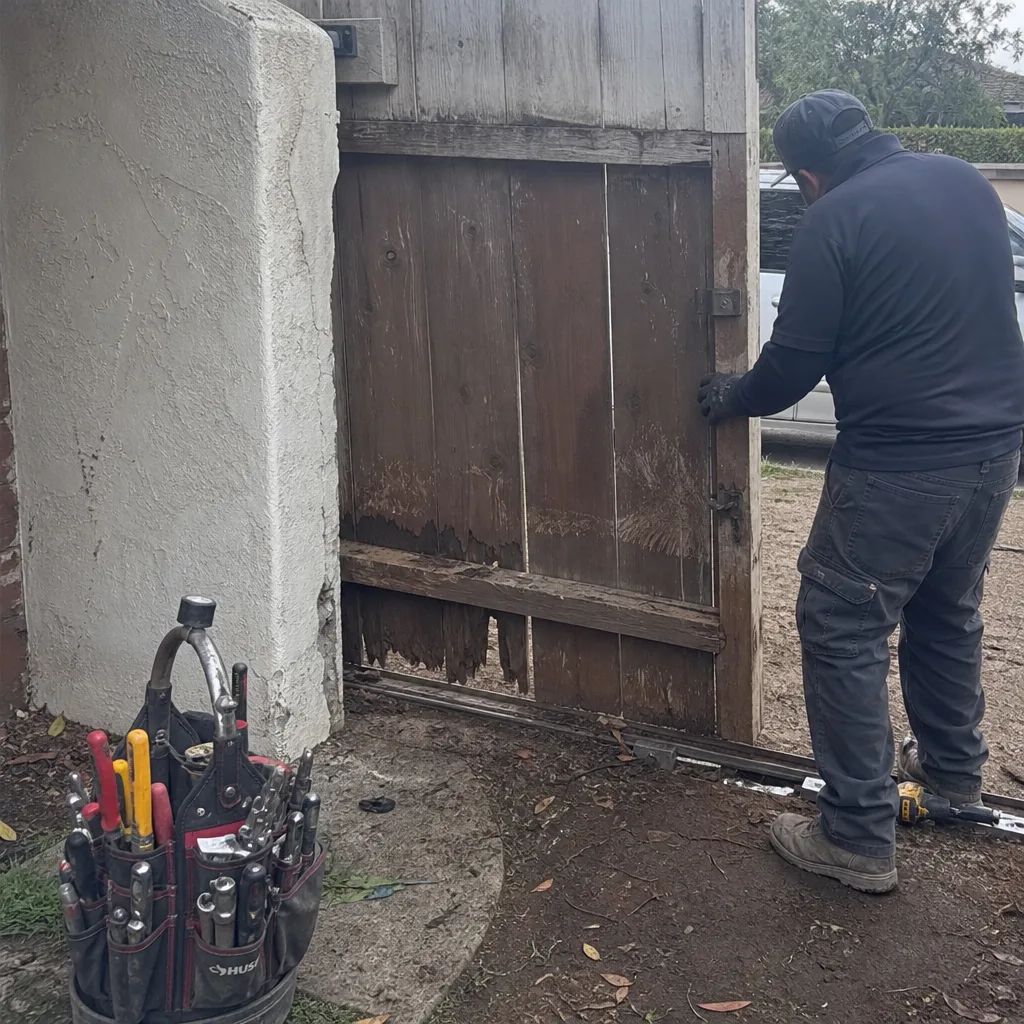 Before
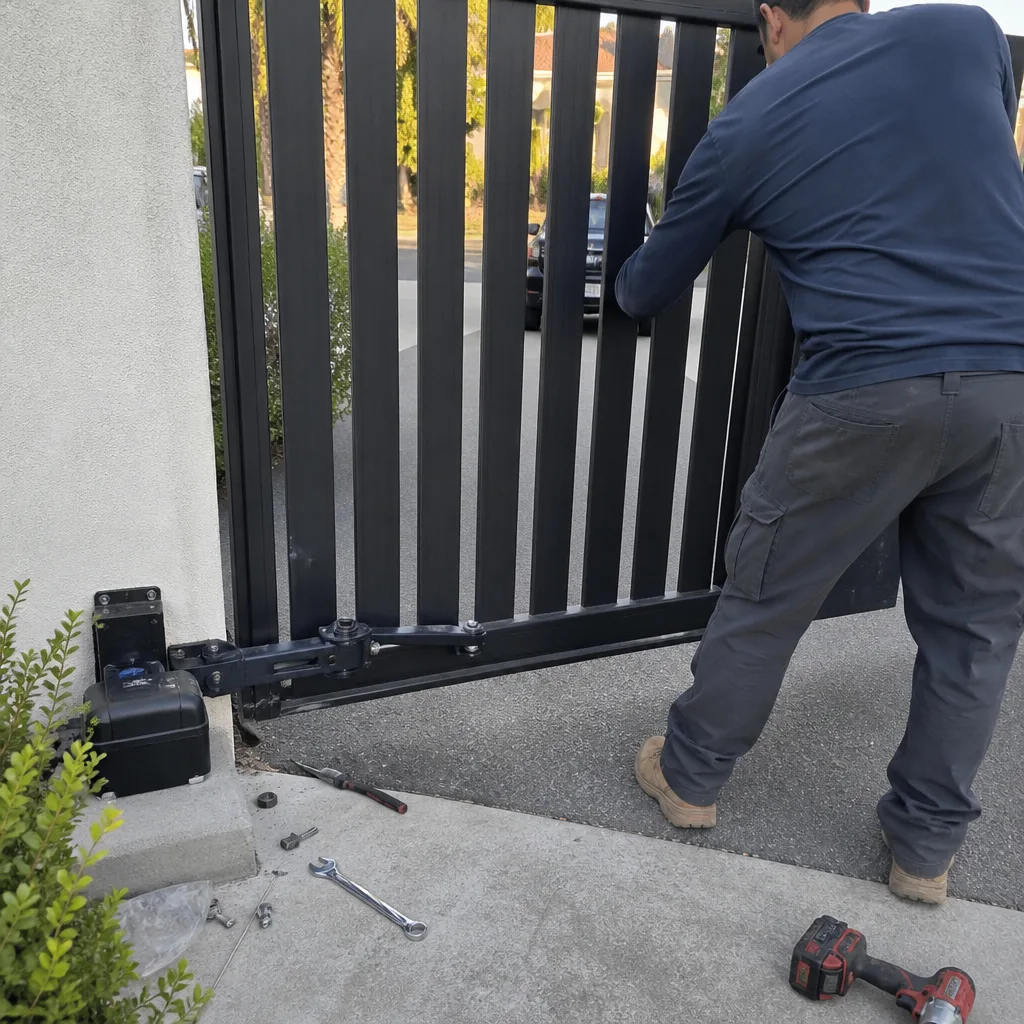
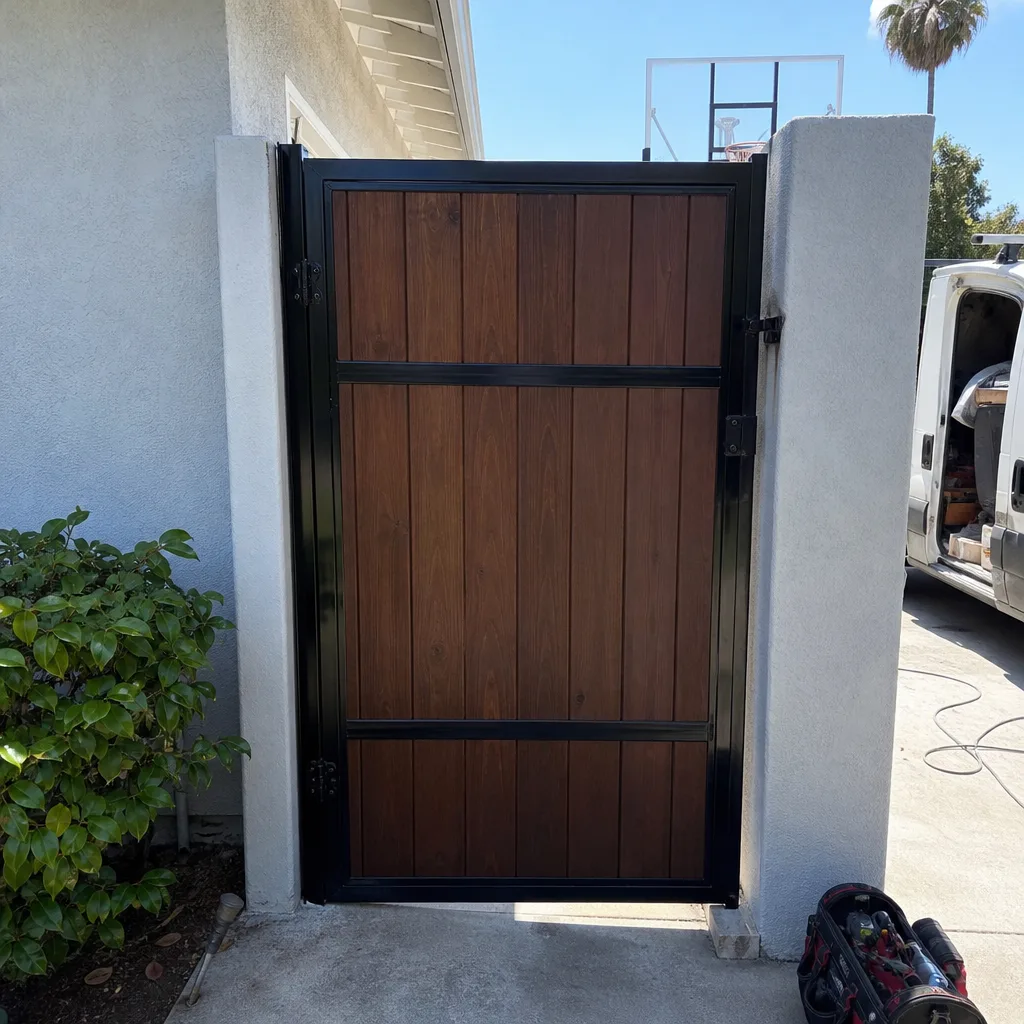 After
After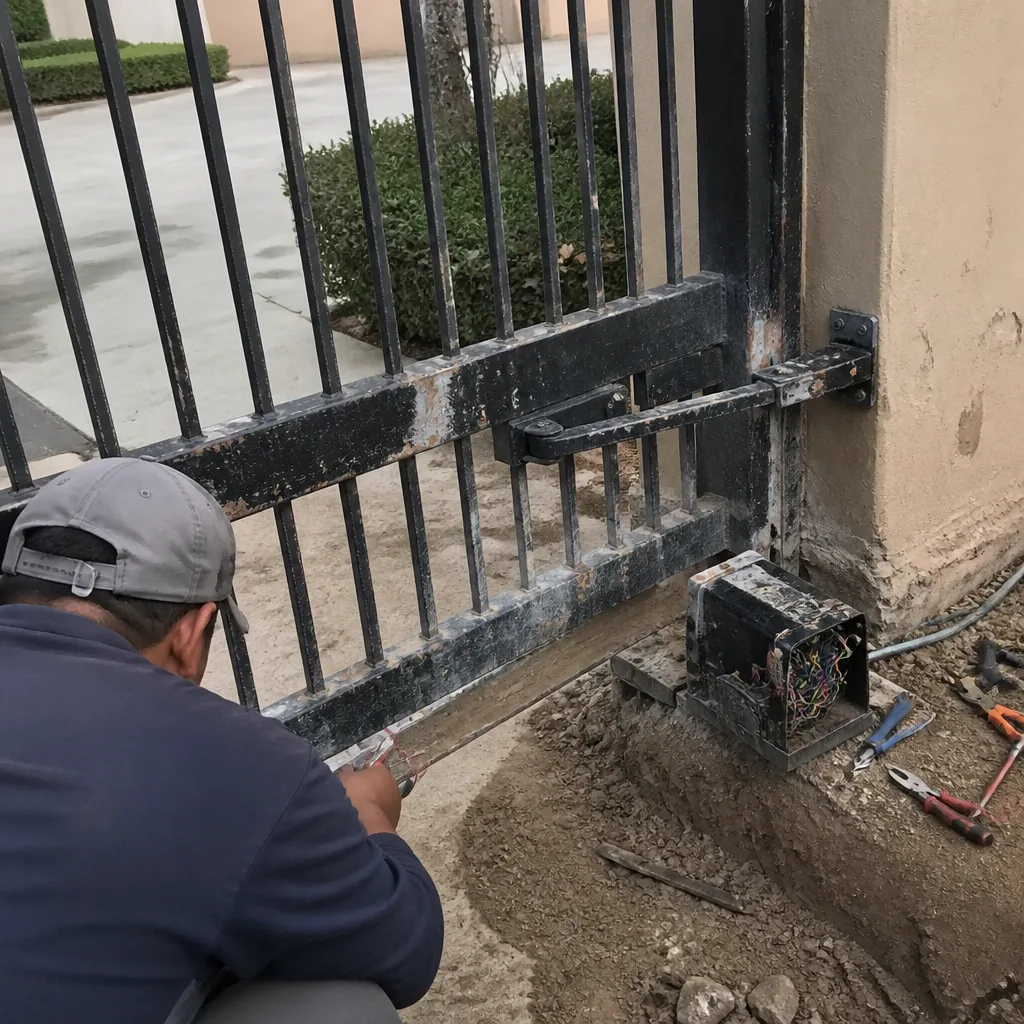 Before
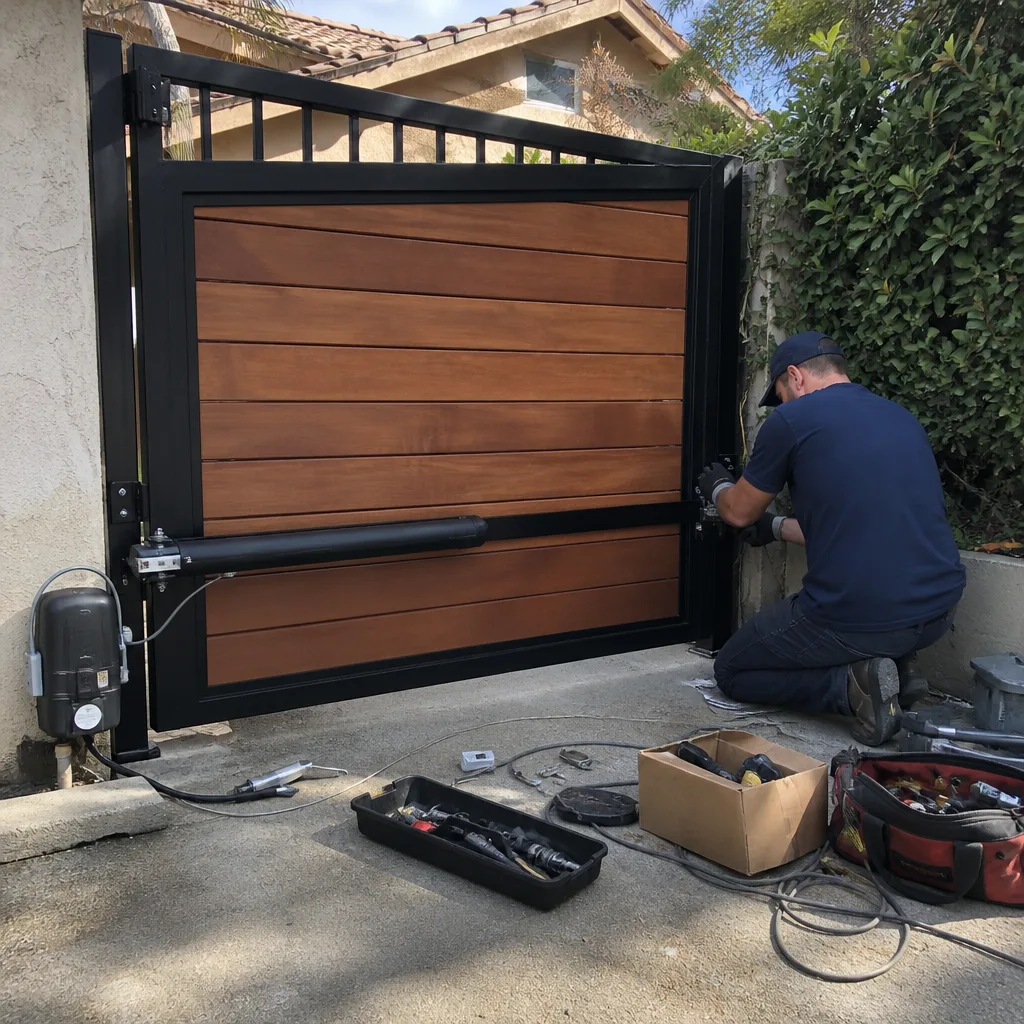 After
After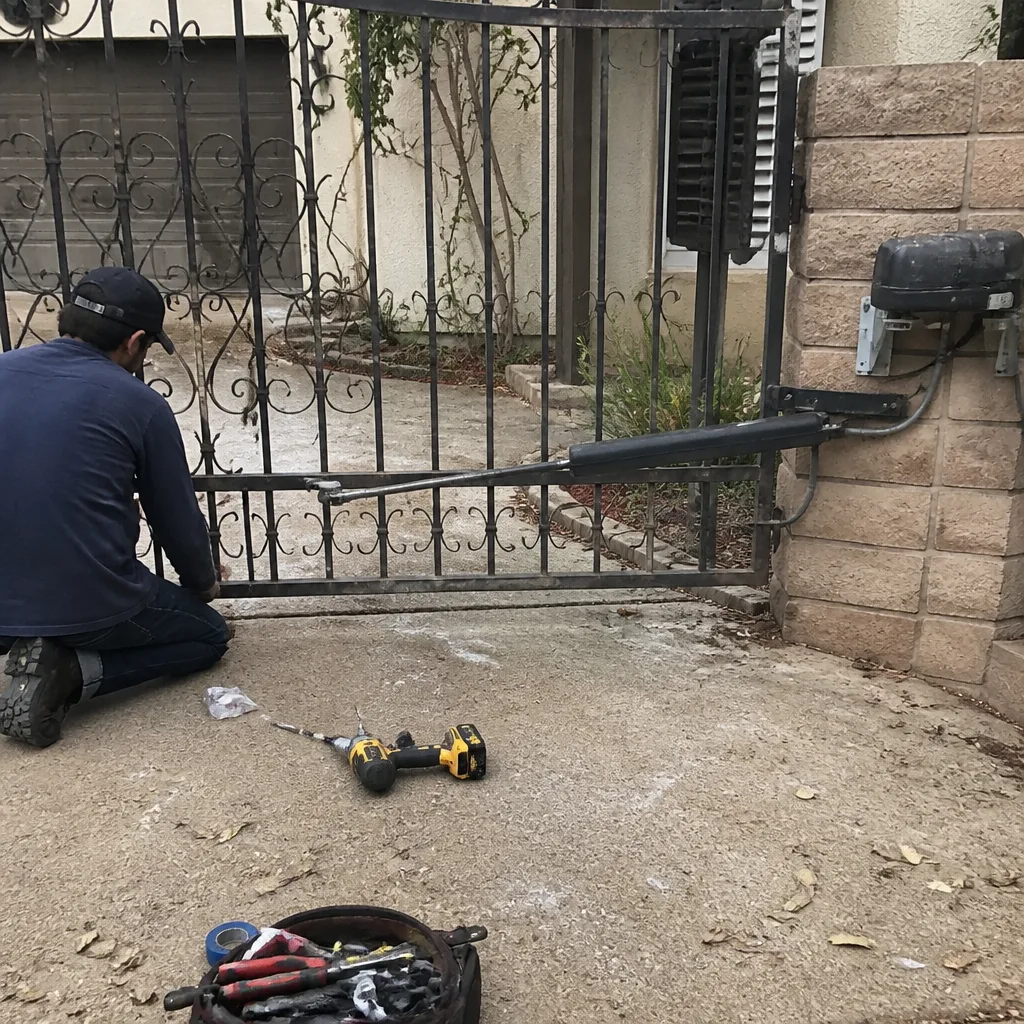 Before
 After
After