
Last updated October 16, 2026
Free on-site gate assessment - hinges, posts, and your LiftMaster or Nice gate operator checked before anything is quoted
The assessment is free and the quote is the invoice.
Get your free estimateGate Repair Cost Breakdown: The San Diego Homeowner’s Reference for 2026
Most San Diego homeowners assume a gate repair bill starts at the cost of the part. It doesn’t. The part is usually the cheapest line item. What you’re really paying for is knowing why it failed, getting a tech who actually shows up, and having the fix last longer than six weeks. Coastal air eats electronics, hard water shortens hydraulic life, and the same model actuator that lasts nine years in Poway might give you four in Point Loma. This guide breaks down what our Gate Repair services actually cost in San Diego in 2026, why those numbers move, and how to avoid paying for the same repair twice.
Styles & brands we work with
- Wrought iron
- Wood & steel frame
- Farm & ranch
- Sliding driveway gates
- LiftMaster operators
Quick Answer
Most gate repairs in San Diego run between $240 and $1,200 in 2026, with the average job landing near $525. Swing-gate actuator replacement typically costs $480 to $950, while a control board swap on a slide gate runs $300 to $700. You’ll pay more near the coast, for heavy iron gates, or when a cheap earlier repair left secondary damage behind.
Table of Contents
- What a Gate Repair Actually Costs in San Diego
- The Three Cost Drivers Most Homeowners Miss
- Repair vs. Replace: The 2026 Breakpoint
- What You’ll Pay for Common Parts in San Diego
- How the San Diego Climate Affects Gate Repair Costs
- Step by Step: What a Real Repair Visit Looks Like
- Electrical vs. Mechanical Failures: Why the Price Gap Is Wider Than You Think
- Common Mistakes to Avoid
- When to Call a Professional
- Frequently Asked Questions
- The Bottom Line
What a Gate Repair Actually Costs in San Diego
Here’s the number most people never hear: the median gate repair invoice in San Diego County for 2026 sits right around $525. That’s the midpoint, not the starting price. A simple limit-switch adjustment or hinge lubrication might run $180 to $260. A full swing-gate actuator swap with a new control board at a coastal property in La Jolla or Del Mar will push past $1,400. The spread exists because gate systems aren’t one system. They’re three layers: the physical gate itself, the operator that drives it, and the electronics that tell the operator what to do. A problem at any layer looks the same to the homeowner (the gate won’t open) but the repair path and the cost are completely different.
At Portcullis Gate Repair San Diego home, we’ve seen the same symptom on three different houses in the same Mira Mesa cul-de-sac produce three different invoices: $210 for a misaligned safety sensor, $540 for a failing capacitor on a LiftMaster operator, and $1,100 for a rusted actuator arm that had been waiting to snap for two wet winters. The lesson is simple: any repair estimate that arrives before a tech has looked at the gate is a guess, not a quote. A real price comes after diagnosis, written down, before a single bolt is turned.
Here’s a realistic range for the most common jobs we handle across San Diego:
- Hinge replacement: $180 to $320 per hinge, including shimming and alignment
- Limit switch calibration: $150 to $250
- Safety sensor repair or replacement: $190 to $340 per sensor
- Control board replacement: $300 to $700 depending on the operator brand
- Actuator or motor swap (swing gate): $480 to $950 parts and labor
- Full operator replacement (slide gate): $900 to $2,200 including rail work
- Cable or chain tension repair: $220 to $420
- Ground loop or in-ground sensor repair: $350 to $750 because of the trenching involved
Notice that the bigger numbers all trace back to one fact: San Diego’s gate market is dominated by automation. A manual farm gate is cheap to fix. An automated swing gate with an operator, a receiver, photo eyes, and a control board is a small electro-mechanical machine bolted to your driveway. Machines fail the way machines fail: one component at a time, sometimes two at once.
The Three Cost Drivers Most Homeowners Miss
Homeowners don’t typically understand three structural things that drive the bill. Once we explain them, estimates start making sense. You can also check our Gate Repair Maintenance Checklist for San Diego Homeowners for preventive steps.
1. The operator brand you already own
San Diego neighborhoods show clear brand clusters. Mission Hills and Kensington tilt toward LiftMaster and DoorKing on older properties. Rancho Bernardo and Scripps Ranch have a lot of FAAC and BFT operators from 2005 through 2015. Newer build-outs in Otay Ranch and Chula Vista are heavy on Linear and Ghost Controls. Some of these systems use proprietary control boards that can only be swapped with the same brand’s part. A generic board doesn’t exist for a BFT operator. Repair techs like ours carry common boards from LiftMaster, FAAC, BFT, and Linear and can usually diagnose and swap same-day. But the part cost varies by brand: a LiftMaster board runs $220 to $380; a BFT board can hit $450; a Viking board occasionally runs higher still. That’s not markup. That’s the parts ecosystem you bought into when the original installer chose the operator.
2. Gate weight and material
A hollow aluminum pedestrian gate weighs less than a solid iron estate gate. That weight determines how hard the actuator works every single day. A 14-foot solid iron driveway gate in Rancho Santa Fe puts ten times the strain on the actuator and hinges than a light aluminum gate in Clairemont. When a component fails on a heavy gate, it often fails catastrophically: a snapped hinge pin often takes the gate out of square, which then damages the actuator shaft, which then throws a limit switch fault. The repair goes from a $200 hinge job to an $800 multi-component job because the failure cascaded. Lighter gates fail more gently and typically get a cheaper, cleaner repair.
3. Access to the site, not just the gate
This is a San Diego-specific variable: coastal canyon lots, steep driveways, and gated side yards that need a long walk to get to the operator. A slide gate in Normal Heights with an operator in an easily accessible steel box is a 90-minute job. A swing gate in Point Loma where the actuator is mounted low and behind a retaining wall is a half-day job and often a two-man job because of the lifting and positioning. Labor is billed by the hour or by the job, and tight access adds real time. When we give a quote, we include that access reality in the labor number. It’s better than a tech arriving and announcing a surprise “difficulty surcharge” afterward.
Repair vs. Replace: The 2026 Breakpoint
The traditional rule of thumb is to replace when repair costs exceed half the value of the asset. For gate operators, the 2026 breakpoint is slightly different: if the operator is more than 12 years old AND the repair requires a board plus a motor plus a gear train, you’re usually better off replacing the operator. A 2009-era FAAC swing operator with a dead board and grinding gears may chew through $850 in repairs and still fail again within 18 months. A new operator runs $900 to $1,400, carries a manufacturer warranty, and starts at zero wear. We tell San Diego homeowners the truth on this call. Sometimes the best gate repair is a swap-out.
Same logic applies to the physical gate itself. A wrought iron gate that has rusted through at the bottom rail or separated at a welded joint can be welded and reinforced, and for $500 to $900 that’s often a great result. But if you’re chasing rust on four different rails every four years, replacement starts making sense. That said, there’s no formula that works for every gate. Here’s our step-by-step thought process when we’re standing in a driveway:
- Determine the age and condition of the operator. Under 8 years? Repair almost always wins. Over 15 years? We’re leaning replacement.
- Identify the failure point. A clean electrical fault (dead board, bad capacitor) is easy to repair. Mechanical wear inside the gear train is usually a sign the operator is done.
- Check the gate itself. If the gate is out of square or sagging, any new operator will be fighting an uphill battle every day. The gate gets fixed before or at the same time as the operator.
- Give a written price for both paths. You should always see the repair number and the replace number. If they’re within a few hundred dollars, the replacement is the smarter long-term money.
This is also one of the reasons the Gate Repair in San Diego guide on our site walks through diagnosis language: the more accurately you can describe the symptom, the better the first visit goes.
What You’ll Pay for Common Parts in San Diego
Here’s a concrete parts cost list for 2026, San Diego market. These are the raw parts, before labor. Labor for most of these jobs adds $120 to $280 depending on complexity and access.
- Control board (LiftMaster): $220 to $380
- Control board (BFT or FAAC): $320 to $480
- Limit switch set: $25 to $85
- Photo eye sensor pair: $95 to $180
- Actuator arm (residential swing): $240 to $520
- Gate wheel or roller set (slide): $75 to $190
- Keypad with wireless receiver: $110 to $260
- Remote transmitter: $45 to $90
- Capacitor for a single-phase operator: $30 to $70
- Hinge set (weldable steel): $60 to $160 per pair
These are the prices we work with daily. No one in San Diego should pay $900 for a control board on a residential LiftMaster operator. It doesn’t happen in this market. If you get a quote with a part number, you can look it up. If the quote only says “control module” with no brand or part number, ask for the specific board. Reputable companies write down what they’re installing.
How the San Diego Climate Affects Gate Repair Costs
San Diego’s climate is mild, which means homeowners forget that gates live outside full-time. The coastal air east of I-5, from Imperial Beach up through Pacific Beach and La Jolla, carries salt. Steel hinges, smooth rods, and unsealed control boxes all oxidize faster within two miles of the beach than they do in Santee or El Cajon. We regularly see actuators in Point Loma with rusted shaft seals at year five, while a nearly identical unit in Poway runs seven or eight years. The cost implication: coastal homeowners should budget for hinge and actuator work sooner, and they should strongly consider stainless or powder-coated hardware on any replacement.
Inland heat also does its own damage. Ramona, Escondido, and Lakeside have stretches where the August sun cooks the top of an exposed operator. Control boards and capacitors hate heat. That’s the second climate cost center for the county: thermal stress on electronics. A Linear or Ghost Controls operator in a black metal box bolted to an east-facing stucco wall will push its board harder in East County than the same unit in a shaded La Mesa side yard. The fix isn’t complicated: a breathable cover, a bit of shade, and surge protection (more on that below). But most gates we see have none of the three.
Step by Step: What a Real Repair Visit Looks Like
One of the biggest trust gaps in this trade is simple: homeowners don’t know what the technician is supposed to do. Here’s a breakdown of how a proper gate repair visit should go, whether it’s us or anyone else. Use this as your yardstick. For related details on compliance, see our guide on Gate Repair Permits, Codes & Inspections in CA: What You Need to Know.
- Arrival and initial observations. The tech should look at the gate, test it once, and make notes. The best technicians watch the gate move once before touching anything. Most failures are visible in the movement: a stutter, a slowdown, a jerk at the end of travel.
- Diagnostic with the operator cover off. For any electric or automated gate, the cover comes off. The tech should check the board for burn marks, test the capacitor and transformer if present, and run a manual test on the motor. This takes 15 to 30 minutes.
- Written quote before repair work starts. This is the non-negotiable. The tech should write the diagnosis, the recommended repair, the exact parts, and the total price on paper or on a tablet. You should be able to read it and say yes or no. No one should be disassembling your gate before the price exists in writing. This is one of the four commitments we make on every job at Portcullis Gate Repair San Diego, and frankly, it should be standard practice across the whole industry.
- The repair, plus a check for the underlying cause. A good tech doesn’t just swap the failed part. They look for the reason the part failed: a misaligned gate that’s overloading the motor, a worn ground loop, a surge that’s already got the board running hot. If the cause isn’t addressed, the repair will repeat. We call that a “come-back repair” and it’s the thing homeowners hate most, completely justifiably.
- Testing under load. The tech should open and close the gate several times, test the remote, test the keypad, and check the safety sensors by blocking the gate’s path. If the gate stops and reverses, the sensors are working. If it keeps pushing, it’s not done.
- Paperwork and a written guarantee. Every repair at Portcullis Gate Repair San Diego carries a written guarantee, and the 365-Day Done Right Promise means if the repair fails within that year, we come back and make it right at no charge. The guarantee goes on the invoice in writing. Not a verbal “oh yeah, we’ll take care of you.” Written down.
For electric gate work specifically, our Electric Gate Repair in San Diego page walks through the electrical diagnostic process in more detail.
Electrical vs. Mechanical Failures: Why the Price Gap Is Wider Than You Think
Homeowners use “the gate is broken” as a single category. Technicians split the world into two: electrical and mechanical. Mechanical failures are physical: a snapped hinge pin, a bent gate track, a broken wheel, a seized actuator arm. Electrical failures are the nervous system: a dead control board, a failed capacitor, a shorted photo eye, a burnt relay. The price gap comes from the diagnosis time. A snapped hinge is visible in thirty seconds. A control board that intermittently drops the wireless signal can take 45 minutes of testing to chase down. The labor bill on an electrical fault includes time you never see: testing, ruling out, and distinguishing a bad board from a bad power supply from a bad sensor.
Electrical work also carries a real safety component. We’ve met homeowners who have tried to troubleshoot a gate control board with the power still live. That’s a dangerous move. Gate operators run on 120-volt or 240-volt circuits, and the capacitor inside can hold a charge after the breaker is thrown. If you’re not trained on these systems, call someone who is. A diagnostic visit is cheaper than a medical bill. And since 2008, our techs have been background-checked, uniformed, and trained on the specific operator families most common in San Diego: LiftMaster, FAAC, BFT, and Linear among them.
The other variable is brand. A BFT control board is a specialized part. A Linear board is easier to source and generally less expensive. If your gate was installed in a South Bay development in the mid-2010s, there’s a good chance it’s a Linear operator. If it’s an older Rancho Santa Fe estate gate, it might be a FAAC. These aren’t random details. The brand determines part availability, price, and whether we can finish the repair on the first visit or need a return trip. This is why we stock boards and common failure parts for all the brands we service.
Common Mistakes to Avoid
- Paying for the same repair twice. If a fix fails within a few months, the underlying cause was likely never addressed. A proper repair comes with a written guarantee that covers more than the part: it covers the correction. If you don’t have a written guarantee on the last repair, that invoice mostly bought you a temporary patch.
- Accepting a quote before any diagnosis. A phone quote based on a symptom description is a guess. A $200 limit-switch fix and a $600 board swap can produce the same “gate won’t open” complaint. Insist on a written price after the tech has looked at the gate. If a company won’t open the cover before quoting, that’s a red flag.
- Ignoring the gate itself while chasing the operator. A sagging or out-of-square gate wears down every component attached to it. Some San Diego gates from the 1990s and early 2000s have settled significantly. Fixing the operator without squaring the gate is a prescription for a repeat failure.
- Skipping surge protection. San Diego doesn’t have heavy lightning activity, but power surges from SDG&E grid events and transformer switches are real. A simple surge protector built into the gate’s power line costs $70 to $150 and can prevent a $400 board failure. Most gates we see in the field have no surge protection installed.
- Generic parts on a branded system. A universal remote is one thing. A generic replacement board on a BFT or FAAC operator is another. Aftermarket boards sometimes work; they sometimes cause safety-sensor faults that a factory board would never produce. On the brands we service, we use the manufacturer’s parts and recommend you do the same.
- Oiling hinges instead of repairing them. A squeaky hinge might just need lubrication, but it might also be the early warning of a failing hinge pin. If the noise comes back within a month or two, lubrication isn’t the fix. It’s masking a failure waiting to happen.
- Waiting until the gate fails completely. Gates give warning signs: slower operation, intermittent remote range, grinding sounds, new hesitation at the stop point. Calling at the first warning sign costs less than waiting for the full failure. In San Diego, most gate repairs under $300 start out as “it was making a noise for a few weeks before it stopped.”
When to Call a Professional
You should call a professional if your gate hesitates, stalls, or reverses when it shouldn’t; if you hear grinding or squeaking that returns after lubrication; if the remote works from some spots but not others; if the gate trips a breaker or the control board shows a fault light; if the gate sags, drags, or sits visibly out of square; or if anyone at the property has attempted a repair that involved the motor, capacitor, or control board with the power live. Gate systems mix line voltage, stored charge, and heavy moving steel. The line between “adjustment” and “whoops” is thin. Portcullis Gate Repair San Diego offers free estimates in San Diego – call (619) 793-3558 and we’ll send someone to diagnose the gate and put the price in writing before any work starts.
Frequently Asked Questions
Most gate repairs in San Diego range from $240 to $1,200 in 2026, with the typical invoice landing near $525. The final number depends on whether the failure is electrical or mechanical, the operator brand, and how close you are to the coast. Call (619) 793-3558 for an exact quote – estimates are free and we’ll put the price in writing before any work starts.
The most common repair we see in San Diego is a failed limit switch or a misaligned safety sensor on an automated swing gate. These are relatively cheap fixes at $150 to $340, but they often get misdiagnosed as “the motor is dead” by homeowners and a few less-than-careful techs.
It depends on age and the number of failed components. Under 8 years old, repair is almost always cheaper. Over 15 years old with two or more component failures, replacement usually wins. A good tech will write both options out so you can compare them side by side.
Yes, real protection makes sense here. San Diego gets fewer lightning strikes than the Southeast, but SDG&E grid events and routine transformer switching can still spike a gate’s control board. A $70 to $150 surge protector is cheap insurance against a $400 board replacement.
Most repairs take between 90 minutes and 4 hours depending on the failure and the access. A limit switch or sensor adjustment is quick. A full actuator swap on a tight Point Loma corner lot can take half a day. We’ll give you a real arrival window and an honest time estimate before we start.
Every repair at Portcullis Gate Repair San Diego carries a written guarantee. For more guides & resources, visit our blog. If the repair fails within 365 days, we come back and make it right at no charge. That includes the return trip, the labor, and any replacement parts required to correct the failed repair. It’s written on the invoice, not just promised over the phone.
The Bottom Line
Gate repair in San Diego is a $240 to $1,200 proposition in 2026, with the average job around $525. The spread comes from the operator brand on the property, the weight of the gate, and the access a tech has to the equipment. Coastal properties pay a modest climate tax in faster hinge and actuator wear. Inland properties trade that for heat-stressed electronics. The smartest money goes toward a proper diagnosis, a written price before work starts, and a repair carried by a written guarantee. That’s what we do at Portcullis Gate Repair San Diego, and if your gate is acting up, you can reach us at (619) 793-3558 any hour of the day.
Written by Dean Prescott, Owner at Portcullis Gate Repair San Diego, serving San Diego since 2008.
See the difference
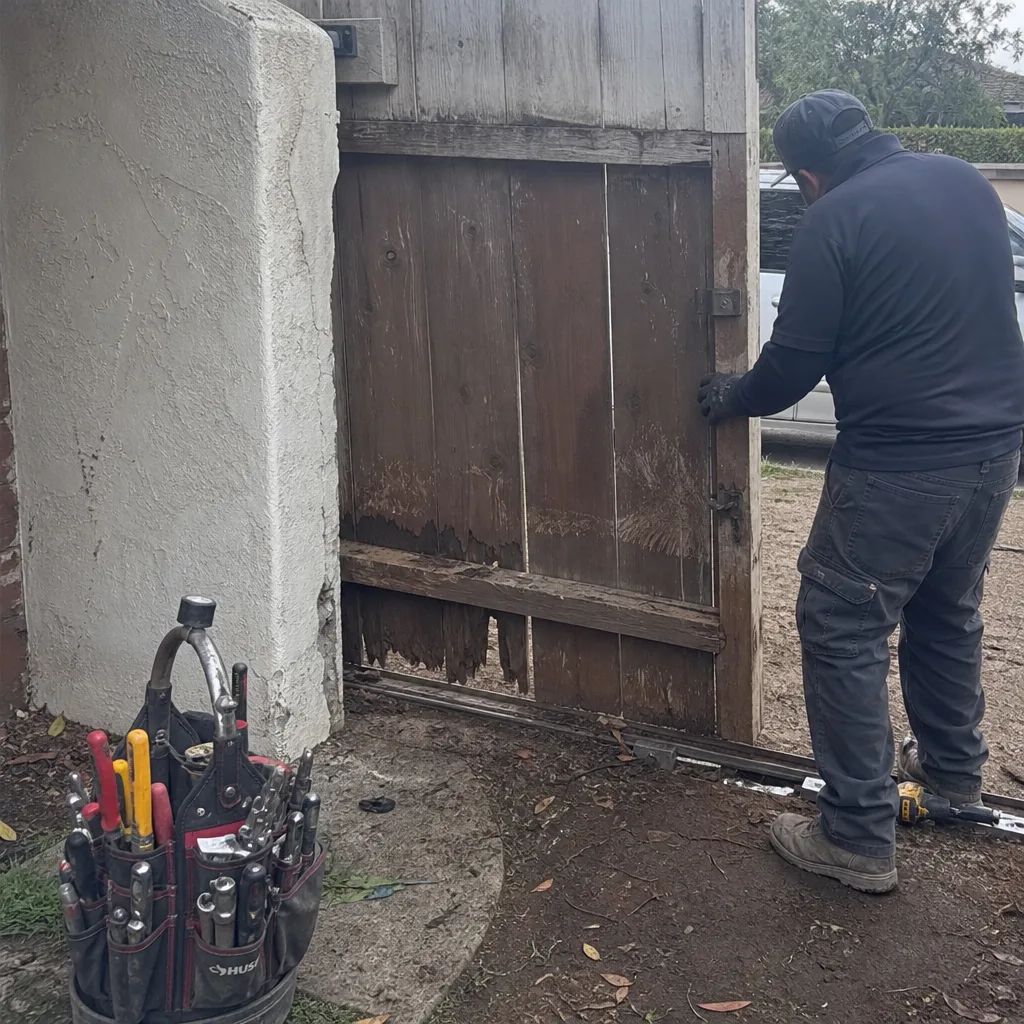 Before
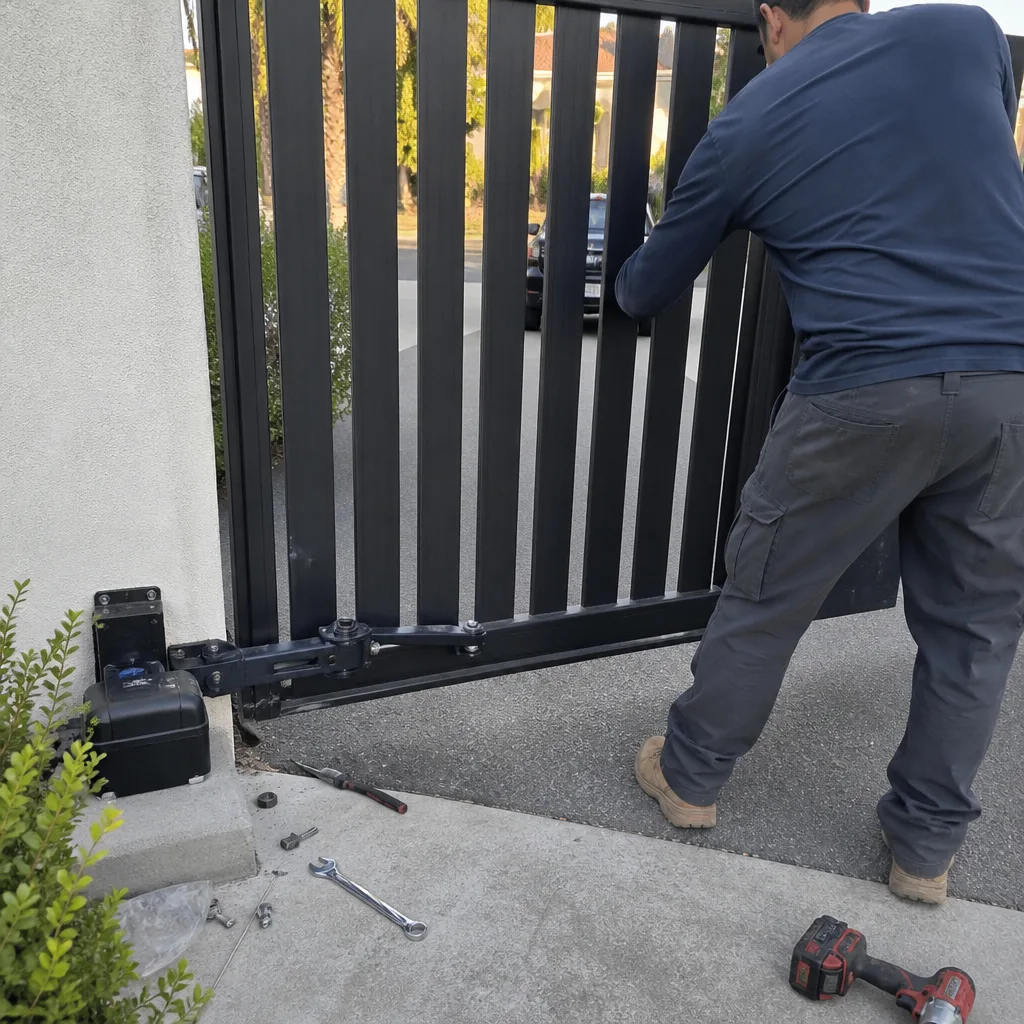
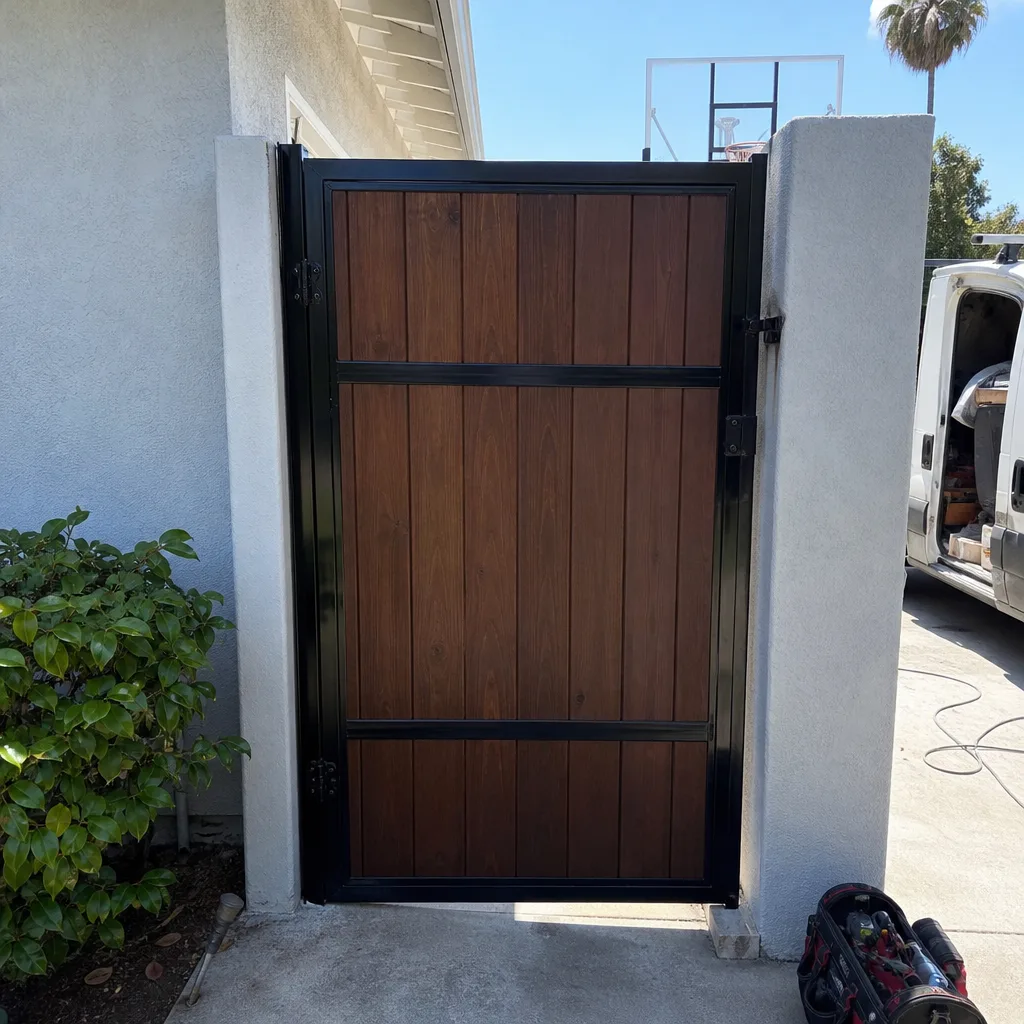 After
After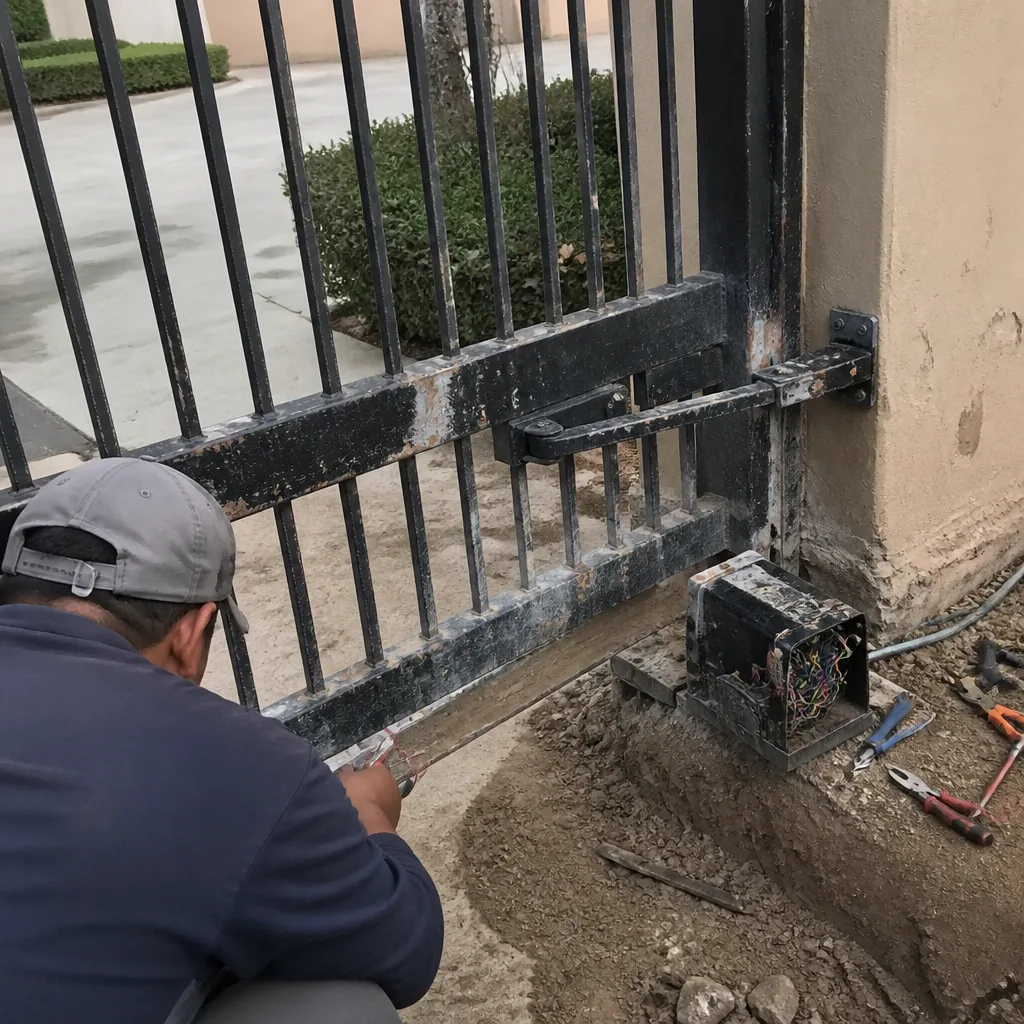 Before
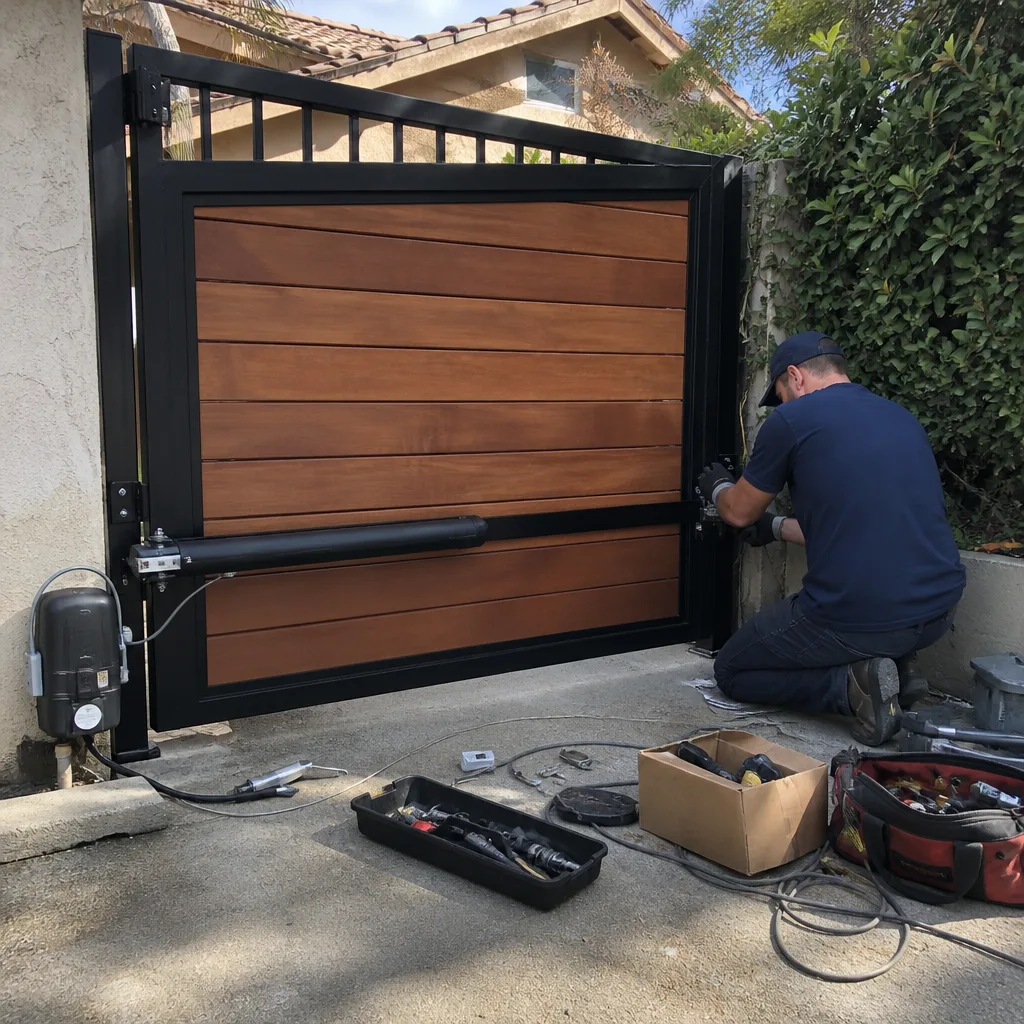 After
After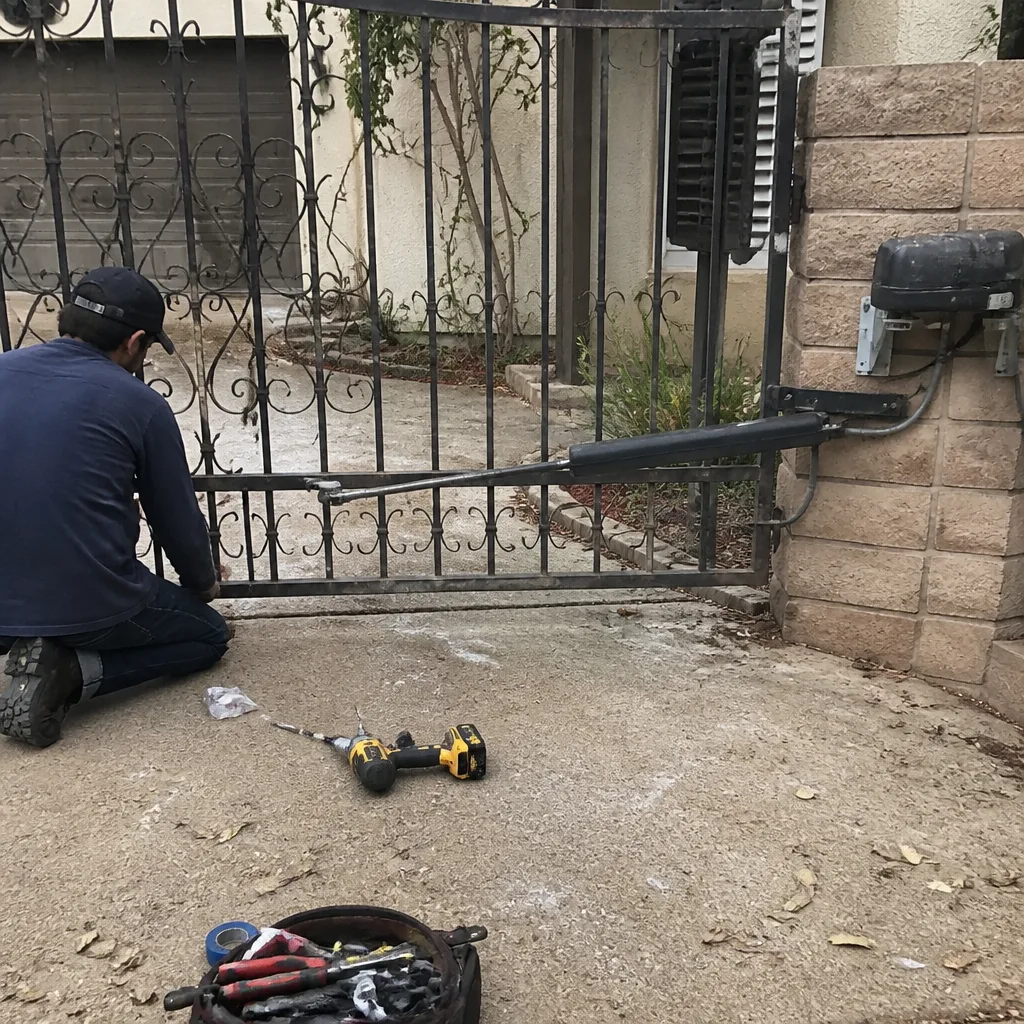 Before
 After
After